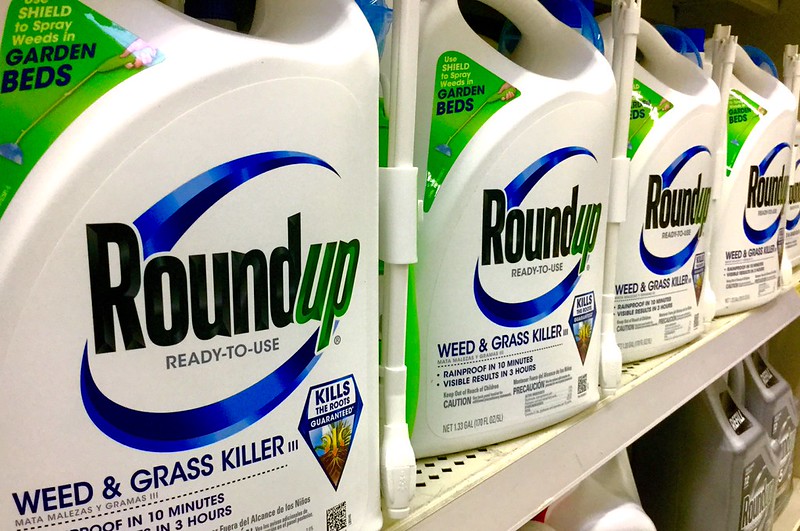
A review article concluding the weed killer Roundup “does not pose a health risk to humans” has been retracted eight years after documents released in a court case revealed employees of Monsanto, the company that developed the herbicide, wrote the article but were not named as coauthors.
The safety of glyphosate, the active ingredient in Roundup, is hotly debated and currently under review at the U.S. Environmental Protection Agency. The International Agency for Research on Cancer, part of the World Health Organization, in 2015 declared glyphosate “possibly carcinogenic.”
The now-retracted article appeared in Regulatory Toxicology and Pharmacology, an Elsevier title, in 2000. Gary Williams, then a pathologist at New York Medical College in Valhalla, Robert Kroes, a toxicologist at the University of Utrecht in the Netherlands, and Ian C. Munro, a toxicologist at Cantox Health Sciences International in Ontario, Canada, were listed as the authors. The paper has been cited 614 times, according to Clarivate’s Web of Science.
Three papers about glyphosate on which Williams was an author received an expression of concern and lengthy corrections in 2018 because the authors didn’t fully disclose their ties to Monsanto or the company’s involvement in the articles.
In 2017, internal Monsanto documents, including emails between employees discussing scientific publications on the safety of glyphosate, were released in the course of a lawsuit alleging exposure to glyphosate caused people to develop non-Hodgkin’s lymphoma. In one email, a Monsanto employee proposed “keeping the cost down” to produce a scientific paper with outside scientists “by us doing the writing and they would just edit & sign their names so to speak. Recall that is how we handled Williams Kroes & Munro, 2000.” (The email is on page 203 of the document linked here and above.)
Despite the revelation of corporate ghost-writing, the paper continued to be cited in research and policy documents without criticism, as well as in Wikipedia articles, according to scholars who analyzed its impact. The researchers, Alexander Kaurov of Victoria University of Wellington in New Zealand, and Naomi Oreskes, a historian of science at Harvard University in Cambridge, Mass., published their findings in September in another Elsevier journal, Environmental Science & Policy. They also wrote to the editors of Regulatory Toxicology and Pharmacology to formally request the paper’s retraction, they wrote in editorials describing their work in Science and Undark.
Their request “was actually the first time a complaint came to my desk directly,” Martin van den Berg, a co-editor-in-chief of the journal, told Retraction Watch. The article was published long before he took over, said van den Berg, a toxicologist at the University of Utrecht in the Netherlands, and “it was simply not brought to my attention” until Kaurov and Oreskes’ article. The retraction “could have been done as early as 2017, but it is clearly a case of two parallel information streams not connecting earlier,” he said.
Kaurov and Oreskes wrote to the editors on July 25, Kaurov told us. The editors’ reaction “was exemplary and professional,” Kaurov said. They replied promptly, he said, and conducted their investigation in one month, which he considered “a reasonable amount of time.”
The notice, which is more than 1,000 words long, appeared online in November. In it, van den Berg detailed “several critical issues that are considered to undermine the academic integrity of this article and its conclusions.” Most concerns were related to what van den Berg described as “the apparent contributions of Monsanto employees as co-writers to this article” without acknowledgment as coauthors. He also called out the authors’ reliance on unpublished studies from Monsanto for their conclusions that glyphosate exposure did not cause cancer, though other studies existed.
“The concerns specified here necessitate this retraction to preserve the scientific integrity of the journal,” van den Berg wrote.
Van den Berg reached out to Williams, the sole surviving author, but did not receive a response, according to the notice. Williams, now an emeritus professor at New York Medical College, did not respond to our request for comment. An institutional investigation found “no evidence” Williams violated a policy against authoring a ghostwritten paper, the college told Science magazine in 2017. Kroes died in 2006 and Munro in 2011.
A spokesperson for Bayer, which bought Monsanto, provided a statement which said the company “believe[s] Monsanto’s involvement was appropriately cited in the acknowledgments, which clearly states: ‘we thank the toxicologists and other scientists at Monsanto who made significant contributions to the development of exposure assessments and through many other discussions,’ and further identifies several ‘key personnel at Monsanto who provided scientific support.’”
“The consensus among regulatory bodies worldwide that have conducted their own independent assessments based on the weight of evidence is that glyphosate can be used safely as directed and is not carcinogenic,” said the company’s statement.
The ghostwritten paper was among the 0.1 percent of most cited articles on glyphosate, Kaurov and Oreskes found in their analysis. Retracting the article “would not erase twenty-five years of influence,” they concluded, “but it would send a clear, overdue message that fraudulent authorship is unacceptable and that the scholarly record will be protected—no matter how old, how cited or how profitable the journal.”
Like Retraction Watch? You can make a tax-deductible contribution to support our work, follow us on X or Bluesky, like us on Facebook, follow us on LinkedIn, add us to your RSS reader, or subscribe to our daily digest. If you find a retraction that’s not in our database, you can let us know here. For comments or feedback, email us at [email protected].
So the paper was withdrawn because of a perceived bias (not proven) by the writers. What if anything was technically wrong with the paper? Many other evaluations of Roundup have been made in recent years concluding the cancer risk is very very small if not zero. Have these papers been retracted and if so, for what reasons?
I think a retraction is warranted. Having undisclosed coauthors employed by the company whose product you are evaluating is clearly an ethical lapse. Probably it happens quite a bit in pharma, etc. but it should be snubbed out.
I agree that they haven’t demonstrated that the scientific findings are flawed though.
Yes, all pretty obvious after the information came out in 2017, and one wonders how eight years passed in the process. One understands a certain reticence about revisiting something when new information emerges after such a long interval, but how that leads to eight years of dithering is a bit mysterious. On the other hand, we’ve had falsely convicted prisoners released after 40 years.
It happens that we learn things about the past, identify errors made -in this case, editorial errors resulting from authorial deception – and correct hem.
Needless to say, most such errors and deceptions will remain unchallenged as the relevant facts rarely emerge subsequently. But what can be addressed should be addressed.
The systemic problems should also be addressed but that’s another matter. At least within the parameters of our very flawed system we should apply the standards we have. Perhaps even with some urgency.
From what I have read in the past, the Monsanto staff were not just undisclosed coauthors but effectively the true authors of the paper, with the nominal authors having essentially loaned their signature to something provided to them as is.
The lack of any mention of scientific errors in the paper is concerning. Without finding scientific sleight of hand with billions of dollars in play by lawyers who have no value for the concept of what is true and who play deception games, perhaps retraction is inappropriate.
We have a lot of real fraudulent science being created in these legal minefields by simple games, such as performing a correlation analysis and implying causation without a mechanism, and/or using only a subset of possible relevant variables. You can’t describe an N-dimensional problem in N-x dimensions (think conic sections that define a lot of 2-D objects but not a 3-D cone).
For example, take a medical database and correlate the last digit of patients’ SS numbers with cancer type X, and you can get a 2-sigma correlation for 5% of cancer types. This is how man created Astrology, which is effectively a random collection of lights in a 2-D view of a 3-D universe from Earth, correlated with some human affair.
As several commenters correctly noted that the actual facts regarding the safety of glyphosate were never questioned and that the herbicide is indeed safe when correctly used. Retraction watch should attach a clearly and emphatically worded disclaimer making the point clear. So as to lower the chances of fraudulent use by tort shysters.
For years, Eric Bjerregaard has been an uncritical supporter of glyphosate and round up.
And here he is again supporting glyphosate, when clearly now the safety of that chemical is in question because of the most cited paper being retracted.
People like Eric Bjerregaard will never accept any evidence that glyphosate is carcinogenic.
A retraction is warranted. A lot of Monsanto ghost commenters here. When the paper was ghost written by a company profiting from the product in question, and this was hidden in the review process, the paper cannot be trusted. I would not trust the data collection process or the transparency in the data analysis (e.g., p-hacking, selectively reporting data, fabricating results), if the authors already showed a lack of integrity in reporting a pretty big conflict of interest.
The study might not have apparent issues, and it might be impossible to discover methodological issues—not because they are inexistent but because some processes are unobservable (e.g. data collection). We rely on our trust on the scientists to run the study, and clearly there is a big ethical gap in the authors
In one email, William Heydens, a Monsanto executive, weighed in on that option, suggesting Monsanto could cut costs by recruiting experts in some areas, but then “ghost write” parts of the paper. “An option would be to add Greim and Kier or Kirkland to have their names on the publication, but we would be keeping the cost down by us doing the writing and they would just sign their names so to speak. Recall this is how we handled Williams Kroes & Munro 2000,” Heydens wrote in an email