Hydroxychloroquine-COVID-19 study did not meet publishing society’s “expected standard”

The paper that appears to have triggered the Trump administration’s obsession with hydroxychloroquine as a treatment for infection with the novel coronavirus has received a statement of concern from the society that publishes the journal in which the work appeared. 

The April 3, 2020, notice, from the International Journal of Antimicrobial Agents, states that the March 20 article, “Hydroxychloroquine and azithromycin as a treatment of Covid-19: results of an open-label non-randomized clinical trial” 

Continue reading Hydroxychloroquine-COVID-19 study did not meet publishing society’s “expected standard”

Former star cancer researcher who sued his university for discrimination notches eighth retraction

Jasti Rao, who once earned $700,000 a year at the University of Illinois College of Medicine at Peoria and was named the first “Peorian of the Year” before a misconduct investigation put an end to his time there, has now lost eight papers

Rao’s case is among the more colorful that we’ve covered. A highly-regarded cancer specialist, Rao was caught up in a morass of misdeeds, including not only plagiarism and manipulation of data but gambling and behavior tantamount to extortion of his employees. As we reported in 2018

Continue reading Former star cancer researcher who sued his university for discrimination notches eighth retraction

Weekend reads: COVID-19 and peer review; blaming a spell-checker for plagiarism; the fastest retracting country

Before we present this week’s Weekend Reads, a question: Do you enjoy our weekly roundup? If so, we could really use your help. Would you consider a tax-deductible donation to support Weekend Reads, and our daily work? Thanks in advance.

Sending thoughts to our readers and wishing them the best in this uncertain time.

The week at Retraction Watch featured:

Here’s what was happening elsewhere:

Continue reading Weekend reads: COVID-19 and peer review; blaming a spell-checker for plagiarism; the fastest retracting country

A snake bites once, but its picture is used twice

via BMC Emergency Medicine

For some people, a venomous snake is a venomous snake — and evidently, some of those people include journal editors.  

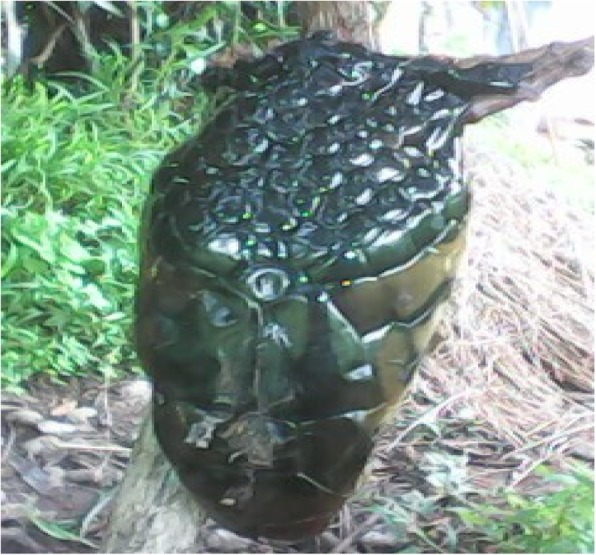
The authors of a 2019 case report describing the unfortunate case of an African farmer killed by the bite of a lethal snake have lost the article because the mug shot of the reptilian culprit didn’t match its description in the paper. 

The paper, “Severe Viperidae envenomation complicated by a state of shock, acute kidney injury, and gangrene presenting late at the emergency department: a case report,” appeared in BMC Emergency Medicine, a Springer Nature title. 

Continue reading A snake bites once, but its picture is used twice

“We thank Dr. Elisabeth Bik for drawing the irregularities to the authors’ attention.” A sleuth earns recognition.

Elisabeth Bik

A trio of researchers in Argentina is up to three retractions, and may well lose even more papers, for doctoring their images. And, in an unusual move, one of the leading data sleuths is getting credit for her work helping to out the problematic figures. 

One article, “Apocynin-induced nitric oxide production confers antioxidant protection in maize leaves,” appeared in 2009 in the Journal of Plant Physiology, published by Elsevier. The authors were affiliated with the Universidad Nacional de Mar del Plata. 

As the retraction notice states: 

Continue reading “We thank Dr. Elisabeth Bik for drawing the irregularities to the authors’ attention.” A sleuth earns recognition.

Zombie papers: Why do papers by the most prolific fraudster in history keep getting cited?

via Flickr

It’s a bit like a slugger crediting Barry Bonds for help with his homerun swing. An anesthesiology journal has retracted a 2018 paper that cited three retracted papers by Yoshitaka Fujii, the record-holder for most retractions by a single author. 

As we’ve written before, journals had a spotty record in reacting to the Fujii scandal, which peaked in 2012. And the latest case involves a bit of that indifference — but other negligence, as well.

The article in question, “Priming with different doses of Metoclopramide preceded by tourniquet alleviates propofol induced pain: a comparative study with lidocaine,” appeared in 2018 in the Egyptian Journal of Anaesthesia (EJA). Three of the citations were of papers by Fujii, although the article had other failings, too.  

Continue reading Zombie papers: Why do papers by the most prolific fraudster in history keep getting cited?