For the second time, a journal has quickly retracted a study that suggested vaccines raise the risk of autism and other neurodevelopmental disorders.
The study first raised a furor last year, prompting a Frontiers journal to quickly retract it. After it was republished in the Journal of Translational Science this month, that journal has also retracted it.
Although the titles of the two papers changed, the abstracts were nearly identical. Both studies surveyed the parents of 666 home-schooled children, 39% of whom where not vaccinated, and concluded that vaccination increased the risk of neurodevelopmental problems, particularly if children were born prematurely.
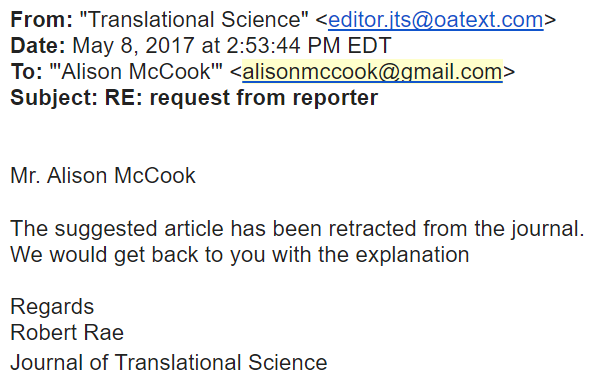
A representative of the Journal of Translational Science told us “Pilot comparative study on the health of vaccinated and unvaccinated 6- to 12-year-old U.S. children” has been retracted, and it will update us with an explanation.
Here’s more from the (now-retracted) abstract:
Continue reading Updated: Vaccine-autism study retracted — again
 In 2012,