A Washington University researcher has admitted to committing research misconduct in research involving eight U.S. government grants, according to a Federal watchdog, and resigned his position, according to the university.
A former postdoc at the University of Michigan admitted to research misconduct, but lied about how extensive it was, according to a new finding by the U.S. Office of Research Integrity (ORI).
The ORI doesn’t describe Venkata Sudheer Kumar Ramadugu‘s misconduct — that detail will likely come later in the Federal Register, according to their relatively new practice [see update below] — but says that as a postdoc in Michigan’s department of chemistry he “engaged in research misconduct” in work supported by two NIH grants.
A former researcher at Cedars-Sinai Medical Center has been sanctioned by a Federal watchdog for misconduct in a 2017 paper that claimed to link food preservatives and obesity.
Uthra Rajamani, first author of the paper in Nature Communications, “engaged in research misconduct,” according to the U.S. Office of Research Integrity (ORI), and agreed to have any Federally funded research supervised for a year. She also agreed to request the retraction of the paper in question.
The U.S. Office of Research Integrity has announced findings of misconduct against a once-promising pharmaceutical scientist at the University of Colorado.
The ORI says Rajendra Kadam fabricated data on government grants while working on his PhD at UC Denver under the supervision of Uday Kompella. As we reported in 2015 when this case first broke, Kadam was put in charge of a piece of technology that apparently he alone knew how to operate — giving him ample opportunity to cook results without fear of detection.
Last month, a judge recommended that a former University of Kansas Medical Center professor be banned from Federal U.S. funding for two years. The ban came after an investigation showed that the researcher, Rakesh Srivastava, had submitted a grant application that was heavily plagiarized from someone else’s. But there’s far more to the case, as Richard Goldstein –who represented the scientist in Bois v. HHS, the first case to overturn a funding ban by the U.S. Office of Research Integrity (ORI), and who has written about another case for us — argues in this guest post.
A researcher fired from the University of Kansas Medical Center (KUMC) in 2014 for plagiarizing the work of a Harvard scientist has been barred from receiving Federal U.S. funding for two years.
The sanctions come three years after the U.S. Office of Research Integrity (ORI) tried to impose a three-year ban on funding for Rakesh Srivastava, who appealed the move. In September of this year, Department of Health and Human Services administrative law judge Keith Sickendick recommended a two-year sanction.
Kathy Partin, who served as director of the U.S. Office of Research Integrity (ORI) for just under two years until being removed from the post late in 2017, has a new position at the U.S. National Institutes of Health (NIH), Retraction Watch has learned.
A liver physiologist at the University of Connecticut with millions of dollars in Federal U.S. funding included false data in half a dozen grant applications, according to the U.S. Office of Research Integrity.
A researcher who was found guilty of committing misconduct while using three federal grants has published new findings that cite those grants.
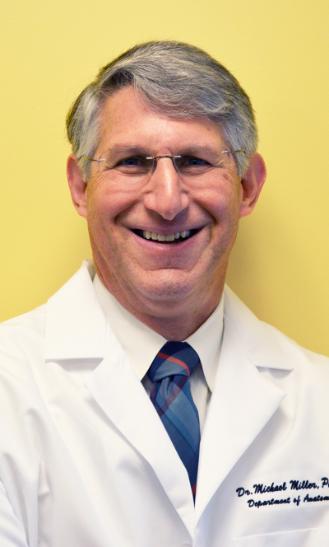
In 2012, the U.S. Office of Research Integrity determined that Michael Miller, a former department chair at the State University of New York (SUNY) Upstate Medical University in Syracuse, had committed misconduct by falsifying and/or fabricating data. The affected research was funded by three grants issued by the National Institute of Alcohol Abuse and Alcoholism (NIAAA), part of the National Institutes of Health (NIH).
Retraction Watch readers may have followed our coverage of the case of Christian Kreipke, a former Wayne State researcher who was recently barred from U.S. Federal funding for five years. That punishment followed years of allegations and court cases, along with half a dozen retractions. The case has been complicated, to say the least, and led to a 126-page decision by a judge last month. Here, Boston-based attorney Richard Goldstein, who represented the scientist in Bois v. HHS, the first case to overturn a funding ban by the U.S. Office of Research Integrity (ORI), tries to explain what it could all mean.
 A Washington University researcher has admitted to committing research misconduct in research involving eight U.S. government grants, according to a Federal watchdog, and resigned his position, according to the university.