US federal watchdog loses director to another government role

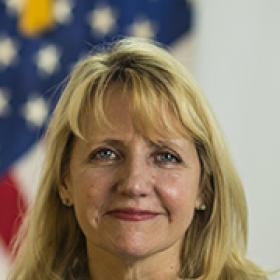
Elisabeth (Lis) Handley

The U.S. Office of Research Integrity, which oversees investigations into allegations of misconduct in grants from the NIH, is once again without a permanent director.

Elisabeth (Lis) Handley, who became director in 2019, has taken on a new role in the U.S. Department of Health and Human Services (HHS), of which ORI is a part. Wanda Jones, who has served as interim and deputy director of the agency, will serve as acting director, according to an HHS spokesperson.

Handley has become principal deputy assistant secretary for health. In a memo to staff, assistant secretary for health Rachel Levine wrote:

Continue reading US federal watchdog loses director to another government role

Former Texas postdoc earns 10-year federal funding ban for faking authors and papers to boost metrics

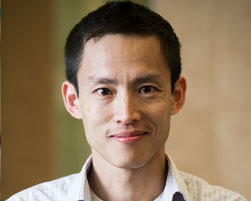
A former postdoc at the University of Texas Health Science Center has been found guilty of misconduct stemming from efforts to rig preprint servers to boost the postdoc’s publication metrics.

The findings about Yibin Lin include the fabrication and falsification of data, as well as plagiarism in six published papers that have since been retracted from the preprint server bioRxiv. On none of those articles does the name “Yibin Lin” appear as an author.

Lin also admitted to making up author names on submitted articles — none of which was published — to dupe preprint servers to “improve his citation metrics,” according to the U.S. Office of Research Integrity (ORI).

Continue reading Former Texas postdoc earns 10-year federal funding ban for faking authors and papers to boost metrics

Texas bone researcher faked data in Nature paper, says federal watchdog, as university rescinds professorships

Yihong Wan

A pharmacologist at the University of Texas Southwestern Medical Center who lost a highly cited 2014 paper in Nature for questions about the integrity of her data has been sanctioned by the U.S. Office of Research Integrity (ORI) — and UT Southwestern has rescinded two professorships she previously held.

According to ORI, Yihong Wan, an associate professor of pharmacology at UT Southwestern: 

Continue reading Texas bone researcher faked data in Nature paper, says federal watchdog, as university rescinds professorships

Miami dean stepped down weeks after misconduct finding

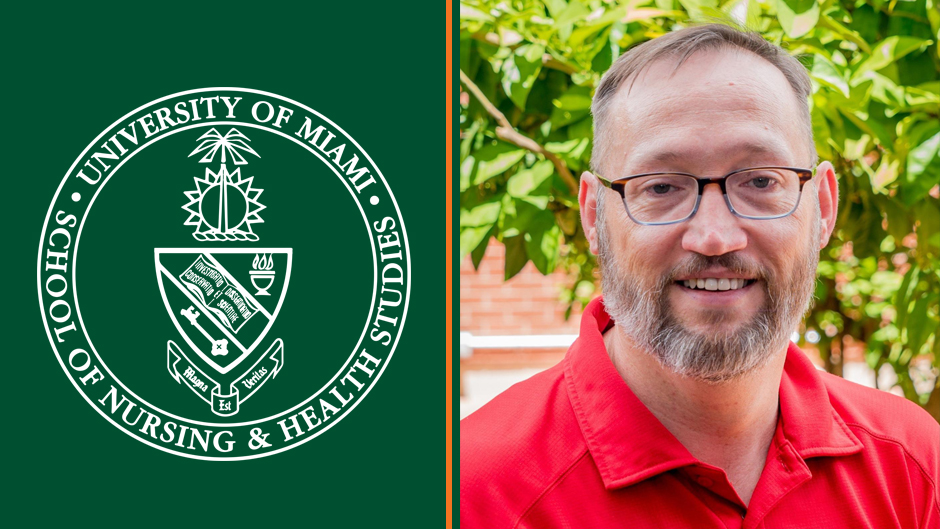
Charles A. Downs, via University of Miami

An associate dean at the University of Miami stepped down from his post two weeks after agreeing to sanctions stemming from a finding of misconduct by a government watchdog, Retraction Watch has learned.

Yesterday, we reported that the U.S. Office of Research Integrity (ORI) found that Charles Downs, “engaged in research misconduct by intentionally, knowingly, or recklessly falsifying and/or fabricating data” in six federal grant applications while on the faculty of the University of Arizona.

Downs was appointed associate dean of Miami’s nursing school in 2018, and stepped down from the position on December 4, according to a university spokesperson. He remains an associate professor at the school.

Continue reading Miami dean stepped down weeks after misconduct finding

Researcher, until last week a Miami dean, faked data in grant applications, says federal watchdog

Charles A. Downs, via University of Miami

A former researcher at the University of Arizona who is now was until last week an associate dean at the University of Miami “engaged in research misconduct by intentionally, knowingly, or recklessly falsifying and/or fabricating data” in six federal grant applications, according to a new finding by the U.S. Office of Research Integrity (ORI).

Charles A. Downs’ work “focuses on acute lung injury and pulmonary diseases,” according to a 2018 press release from the University of Miami announcing his appointment. He “neither admits nor denies ORI’s findings of research misconduct,” the ORI announced today. The agency said that Downs

Continue reading Researcher, until last week a Miami dean, faked data in grant applications, says federal watchdog

A year after a federal misconduct finding, a cancer researcher loses a paper

Sudhakar Yakkanti

A cancer specialist formerly affiliated with Boys Town National Research Hospital in Nebraska who was found to have committed misconduct in nearly 20 grant applications and papers has lost an article in Scientific Reports — a year after his misconduct case became public. 

According to the journal, which, to its credit, flagged the paper with an editor’s note last February, the delay stemmed from efforts to verify information that was not part of the official inquiry. 

The article, “Type IV collagen α1-chain noncollagenous domain blocks MMP-2 activation both in-vitro and in-vivo,” was written by a group led by Yakkanti Akul Sudhakar, whose name — last, at least — might be familiar to RW readers. 

In November 2019, Sudhakar — who also has published as Sudhakar Yakkanti and Akulapalli Sudhakar — was sanctioned by the U.S. Office of Research Integrity for: 

Continue reading A year after a federal misconduct finding, a cancer researcher loses a paper

Former Harvard cancer researcher faked a dozen images, say Feds

A cancer researcher faked a dozen images in three papers and a conference presentation while employed at Harvard teaching hospitals, according to a new report by a federal U.S. watchdog.

The Office of Research Integrity (ORI) found that David Panka

Continue reading Former Harvard cancer researcher faked a dozen images, say Feds

Former Maryland researcher banned from Federal funding for misconduct

Anil Jaiswal

At least seven years after questions were first raised about work by a researcher at the University of Maryland Baltimore, School of Medicine, he has agreed to a three-year ban on Federal funding.

Anil Jaiswal, whose first retraction appeared in 2013, faked data in eight NIH grant applications and six papers supported by Federal grants, according to a new finding by the Office of Research Integrity (ORI). Jaiswal, the ORI said,

intentionally, knowingly, or recklessly: (a) used random blank background sections of film or empty boxes to falsely represent or fabricate western blot analyses; (b) used manipulated images to generate and report falsified data in figures; and (c) used mislabeled images to falsely report data in figures. 

Continue reading Former Maryland researcher banned from Federal funding for misconduct

Drug abuse researcher faked data in grant applications, says Federal watchdog

A researcher at Texas Tech University Health Sciences Center (TTUHSC) in Amarillo plagiarized or faked data in four different federal U.S. grant applications, according to a new finding by the agency responsible for oversight of research integrity at the National Institutes of Health.

Rahul Dev Jayant, according to the Office of Research Integrity, “engaged in research misconduct by intentionally plagiarizing, falsifying, and/or fabricating data” in grant applications to the National Institute on Drug Abuse and National Institute on Alcohol Abuse and Alcoholism for work on alcoholism and opioid dependence. The applications were submitted late last year and early this year.

Jayant, the ORI found, plagiarized from papers by other authors in Nature Protocols and Nature Communications, falsified data in various figures, and fabricated nine bar graphs.

Continue reading Drug abuse researcher faked data in grant applications, says Federal watchdog

Cancer researcher hit with 10-year ban on federal US funding for nearly 100 faked images

A former scientist at Wayne State University in Detroit who lost his PhD from the institution has agreed to a 10-year ban on any federally funded research after being found guilty of misconduct. 

The U.S. Office of Research Integrity says Zhiwei Wang fabricated data in nine grants funded by the National Institutes of Health, as well as in three grant applications and his 2006 doctorate. 

Wang’s bogus data was published in 15 14 papers, according to the ORI, 14 13 of which already have been retracted. Under the terms of the agreement, Wang will ask for the retraction or correction of the 15th article, a 2008 study in Molecular Cancer Therapeutics titled “Induction of growth arrest and apoptosis in human breast cancer cells by 3,3-diindolylmethane is associated with induction and nuclear localization of p27kip.”

Continue reading Cancer researcher hit with 10-year ban on federal US funding for nearly 100 faked images