Authors unhappy as “battlefield acupuncture” paper earns an expression of concern

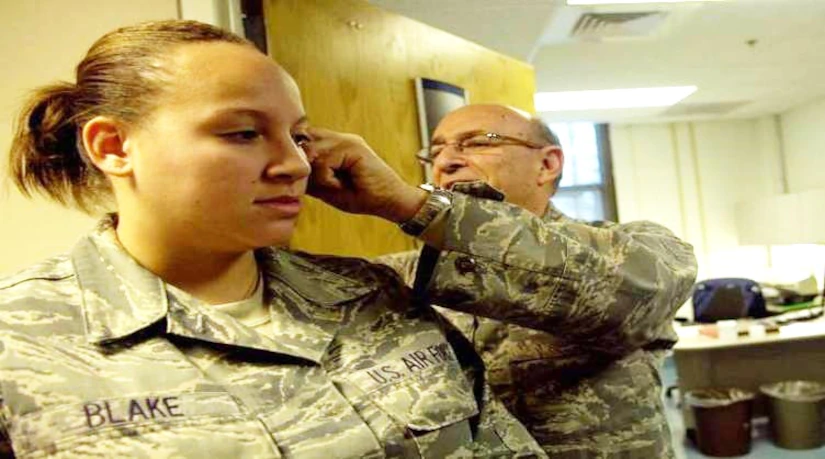
A journal has slapped an expression of concern on a 2021 paper reporting on the utility of self-administered “battlefield” acupuncture in soldiers, citing readers who said the FDA has not approved the devices for that use – a point the authors, who object to the move, dismissed as irrelevant and misleading. 

The study, which appeared in Medical Acupuncture, looked at the experiences of a dozen veterans at an Ohio VA hospital who’d purportedly self-administered acupuncture to treat chronic pain. According to this 2010 article from the U.S. military

Continue reading Authors unhappy as “battlefield acupuncture” paper earns an expression of concern
Two expressions of concern arrive for papers linked to beleaguered biotech Cassava

The Journal of Neuroscience has slapped expressions of concern on a pair of papers linked to the maker of a controversial drug to treat Alzheimer’s disease. 

As we and others have reported, Cassava Sciences has been under intense scrutiny lately. In August, the law firm Labaton Sucharow – who is representing Cassava short sellers – submitted a “citizen’s petition” to the FDA regarding a regulatory filing from the company for its drug simulfilam and called on the agency to halt trials of the experimental medication because it had: 

Continue reading Two expressions of concern arrive for papers linked to beleaguered biotech Cassava

Another setback for ‘Majorana’ particle as Science paper earns an expression of concern
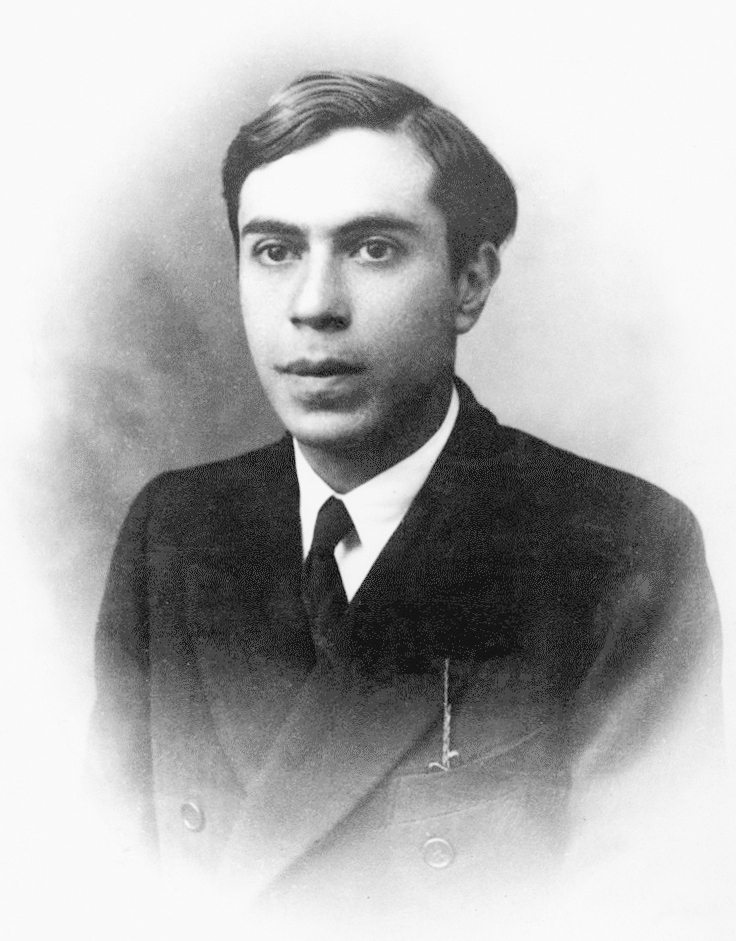
Ettore Majorana, after whom the “Majorana” particle is named
By unknown author / Mondadori Collection, public domain

You might say that the third time is not the charm for a paper on some elusive fermions.

For the third time this year, a leading science journal has raised concerns about a paper on the “Majorana” particle, which, if it exists, would hold promise for building a quantum computer.

In March, Nature retracted a paper on the particle, and in July, Science placed an expression of concern on a different paper that purported to find “a relatively easy route to creating and controlling [Majorana zero modes] MZMs in hybrid materials.”

Today, Science is slapping an expression of concern on another Majorana paper:

Continue reading Another setback for ‘Majorana’ particle as Science paper earns an expression of concern

Paper on sexual orientation and neuropsychiatric disorders earns an expression of concern

Dick Swaab By Sxologist Wikipedia – , CC BY 2.0

An Elsevier journal has issued an expression of concern for a paper it published earlier this year by a Dutch researcher who studies the neurobiology of sexuality.

The article,“Sexual orientation, neuropsychiatric disorders and the neurotransmitters involved,” was written by a group led by Dick Swaab, of the Department of Neuropsychiatric Disorders at the Netherlands Institute for Neuroscience in Amsterdam. 

The abstract of the latest study reads: 

Continue reading Paper on sexual orientation and neuropsychiatric disorders earns an expression of concern

Abstract linking COVID-19 vaccines to heart trouble risk earns expression of concern

A leading heart journal has issued an expression of concern for a meeting abstract it published earlier this year by a cardiac surgeon who sells dietary supplements of questionable utility.

The case is the second involving a recent meeting of the American Heart Association.

The abstract, titled “Mrna COVID Vaccines Dramatically Increase Endothelial Inflammatory Markers and ACS Risk as Measured by the PULS Cardiac Test: a Warning,” was presented at the AHA’s 2021 Scientific Sessions in mid-November and was published in Circulation

The author was Steven Gundry, a cardiac surgeon by training who now sells dietary supplements on his website. Gundry also sees patients at the Center for Restorative Medicine and International Heart & Lung Institute in California and offers advice on YouTube.

But critics have accused Gundry of peddling worthless — if ultimately expensive — advice. 

Continue reading Abstract linking COVID-19 vaccines to heart trouble risk earns expression of concern

Report by former Motherisk lab director of cocaine exposure in a child is subjected to an expression of concern

Gideon Koren

A pediatrics journal has issued an expression of concern for a 2007 paper by a group of Canadian researchers whose leader, Gideon Koren, resigned in 2015 under a cloud after concerns surfaced about the integrity of the data in hundreds of his published studies. 

Koren, once a prominent pediatrician and pharmacologist at the University of Toronto’s Hospital for Sick Children, ran the institution’s Motherisk Drug Testing Laboratory, which conducted hair testing for perinatal exposure to drugs and alcohol. In 2015, an investigation prompted by The Toronto Star found serious problems with the tests, which had been used in “used in thousands of child protection cases and several criminal cases.” 

Koren stepped down that year, and in 2019 relinquished his license to practice medicine in Ontario. Reporting by the Star prompted Koren’s institution to order a review of more than 400 of his published papers. To date, by our count, journals have retracted five of Koren’s papers, corrected four, and have now issued three expressions of concern. 

The newly flagged article, “Chronic cocaine exposure in a toddler revealed by hair test,” appeared in Clinical Pediatrics in 2007. Here’s the notice

Continue reading Report by former Motherisk lab director of cocaine exposure in a child is subjected to an expression of concern

Four papers by Athira CEO earn expressions of concern

Leen Kawas, President and CEO of Athira Pharma. (PRNewsfoto/Athira Pharma, Inc.)

A group of researchers at Washington State University has received four expressions of concern for papers whose findings underpin a publicly traded company founded by two of the most senior authors on the articles.

The studies, all of which appeared in the Journal of Pharmacology and Experimental Therapeutics, came from the labs of Joseph Harding, a medical chemist at Washington State, and his colleague Jay Wright. Published between 2011 and 2014, the four articles report on a molecule called angiotensin IV, work which Harding and Wright leveraged to spin-off Athira, a Seattle-based biotech firm developing treatments for conditions including Alzheimer’s and Parkinson’s disease. 

The CEO of Athira, formerly known as M3 Biotechnology, is Leen Kawas, once a PhD student at Washington State whose 2011 doctoral dissertation provided figures for this fraught 2011 article in JPET, which earned a correction in 2014. Earlier this year, as STAT reported, Kawas was forced to take a leave of absence from the company over concerns that she altered images in several papers. And there has been other scrutiny of the company.

Continue reading Four papers by Athira CEO earn expressions of concern

Readers puzzle over marketing journal’s failures to retract

A marketing journal is taking heat on social media for issuing an expression of concern over a 2019 paper that many readers believe should have been retracted — and correcting another instead of retracting it.

The article now subject to an expression of concern, “Role of Ambient Temperature in Influencing Willingness to Pay in Auctions and Negotiations,” was written by Jayati Sinha, who holds the Macy’s Retailing Professorship at Florida International University and Rajesh Bagchi, of Virginia Tech University. 

According to the abstract:

Continue reading Readers puzzle over marketing journal’s failures to retract

Ivermectin meta-analysis to be retracted, revised, say authors

Less than a month after the withdrawal of a widely touted preprint claiming that ivermectin could treat COVID-19, the authors of a meta-analysis that relied heavily on the preprint say they will retract their paper.

According to an expression of concern posted yesterday and announced by Paul Sax, the editor of the journal that published the paper:

Continue reading Ivermectin meta-analysis to be retracted, revised, say authors

Should journals retract when an author is sent to prison for a crime unrelated to their work?

Should a journal retract a paper when they learn that one of its authors has earned a year-long prison sentence for downloading child pornography?

For Brill’s Journal of Afroasiatic Languages and Linguistics the answer was no. And experts in publication ethics say that was the right call.

The researcher in question is Jan Joosten, who held the prestigious Regius professorship of Hebrew at the University of Oxford, was convicted of downloading 28,000 child abuse images and videos and  placed on the register for sex offenders in France, according to the Guardian.

Continue reading Should journals retract when an author is sent to prison for a crime unrelated to their work?