A journal has republished an edited version of a paper it retracted after a distributor of a chiropractic product the paper criticized wrote in to complain.
The distributor accused the publication of making “very serious, incorrect and libelous statements” and threatened legal action, Retraction Watch has learned.
A Frontiers journal has taken down the abstract of a “provisionally accepted” article about harms from an herbal supplement after the company that sells the products sued the first author for defamation.
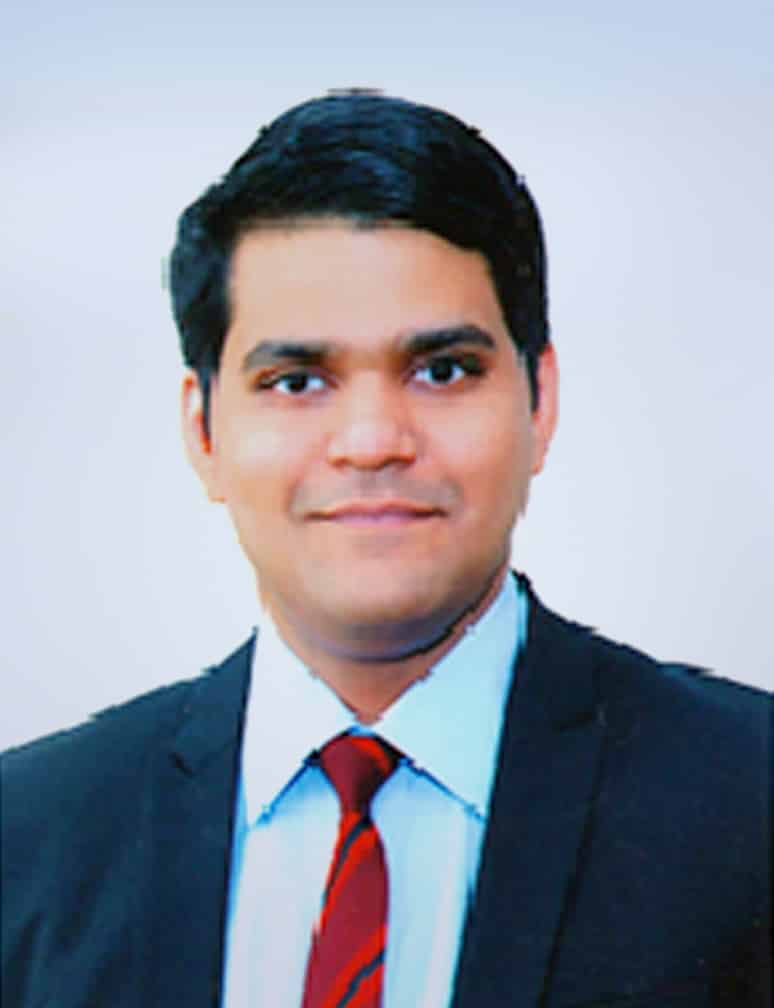
Cyriac Abby Philips
The author of the paper, Cyriac Abby Philips, a hepatologist at Rajagiri Hospital in Kerala, India, has over 266,000 followers on his X account “TheLiverDoc.” In 2020, another of Philips’ papers about harm from supplements was retracted and removed after the large supplement company Herbalife, whose products the paper impugned, put legal pressure on Elsevier.
Himalaya Wellness, an herbal supplement company which says its products are based on Ayurvedic practices, last year sued Philips for defamation based on his posts on X about the company’s products.
One of the winners of the 2024 Kavli Prize in nanoscience has threatened to sue a longtime critic, Retraction Watch has learned.
In a cease and desist letter, a lawyer representing Chad Mirkin, a chemist and director of the International Institute for Nanotechnology at Northwestern University in Chicago, accused Raphaël Lévy, a professor of physics at the Université Paris Sorbonne Nord, of making “patently false and defamatory” statements about Mirkin’s research.
A journal has retracted a letter to the editor and removed the online version from its website “because legal concerns were raised to the Publisher,” according to the notice. The retracted letter had referred to multiple journals as “predatory.”
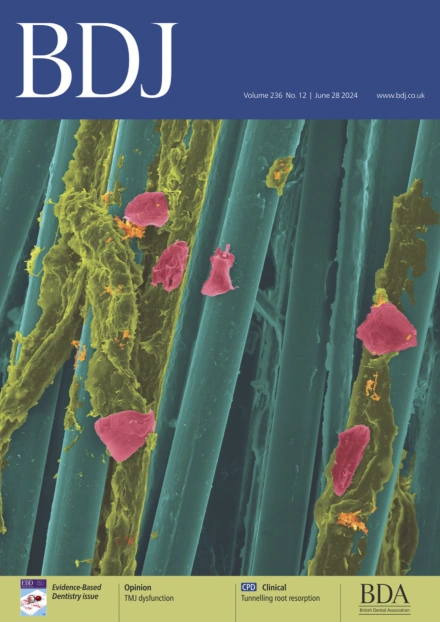
The retracted letter, “A threat to scientific integrity,” appeared in the British Dental Journal in August 2023. The author, Niall McGuinness, director of the MClinDent / DClinDent programme in orthodontics at the Edinburgh Dental Institute, criticized a May 2023 opinion article, “What does the Dentists Act say about orthodontic treatment choice?” for the articles it cited.
In particular, McGuinness called out citations to publications in journals “of questionable probity in regard to publication ethics – ‘predatory’ journals as defined by Jeffrey Beall, of the University of Colorado,” according to an archived version seen by Retraction Watch. He listed four journals cited in the article, including one from the publisher Frontiers and another from MDPI, which appeared on Beall’s list.
The recent criminal indictment of a medical school professor and former scientific advisor to Cassava Sciences on fraud charges for manipulating images in scientific papers and applications for federal funding is a “rare” outcome for such alleged actions that “sends a very, very powerful message.”
That’s according to lawyers who have worked on research misconduct cases.
While many investigations by the U.S. Office of Research Integrity and other government watchdogs find scientists manipulated data in grant applications to the National Institutes of Health and National Science Foundation, few are charged with “major fraud against the United States,” as was Hoau-yan Wang.
A professor of aerospace engineering in India who developed a scientific theory critics call “absolute nonsense” said he is suing journal editors and publishers for pulling three papers he claims could help protect “millions of lives.”
The articles, one in Springer Nature’s Scientific Reports and two in Wiley’s Global Challenges, described a highly technical concept eponymously dubbed “Sanal flow choking.” The first was retracted last summer, the othertwo in March.
“The retractions of our papers are unjustified,” V. R. Sanal Kumar of Amity University in New Delhi told Retraction Watch. “Our legal representatives are actively pursuing a defamation lawsuit against these editors and their illicit agents who were responsible for retracting articles crucial for safeguarding countless lives.”
Sometime last summer, Ben Mol, an obstetrician-gynecology researcher in Australia, and his colleagues were adapting a European guideline on unexplained infertility when they came across a 2006 paper from Maria Luisa Casini, a pharmacologist in Rome, that gave them pause because of results that were not statistically significant.
When they looked further, they ended in a rabbit hole. Casini’s previous work revealed identical patient data across papers published two years apart, despite purporting to come from different groups of patients. The similarities were striking: In the 2006 paper, the women’s mean height was 165.5 centimeters; in the study published two years earlier that reported having more than triple the number of participants, the women had the exact same mean height, with the same standard deviation.
The guideline update would eventually lead to half of the included trials beingflagged for integrity issues, and as a result, left out of the Australian version of the guideline. From that one paper by Casini that had initially raised doubts, the team was able to unearth a trail of suspicious data connected to several ob-gyns in Italy. An Italian medical society and one of the implicated authors have threatened to sue over the allegations, claiming the complaints were made to interfere with a high-profile society election, but the papers are now part of a wider Elsevier investigation.
A journal has issued an expression of concern for a 2008 paper suggesting artificial sweetener Splenda could disrupt the gut microbiome and cause other havoc with the gastrointestinal system – and which is cited by a paper at the center of a lawsuit against one of its authors by the maker of the sugar substitute.
The article, “Splenda Alters Gut Microflora and Increases Intestinal P-Glycoprotein and Cytochrome P-450 in Male Rats,” appeared in the Journal of Toxicology and Environmental Health, Part A, a Taylor & Francis title. The journal has a Part B, too, which also is part of this story.
The paper, which has been cited more than 200 times, according to Clarivate’s Web of Science, caught the attention of Elisabeth Bik, who last year commented on the article on PubPeer, noting potential problems with four of the figures, including Western blots and missing error bars.
For the past 14 years, a cardiac surgeon in Italy has been trying to blow the whistle on a study written by his former colleagues that has been the subject of several investigations – with two of them finding problems with the data. And despite defeating three defamation lawsuits, two which were brought by authors of the paper, he’s not giving up yet.
The 2006 paper, ‘Relationship between atrial histopathology and atrial fibrillation after coronary bypass surgery’, written by several of cardiac surgeon Vittorio Mantovani’s colleagues at the Ospedale di Circolo in Varese, was published in the Journal of Thoracic and Cardiovascular Surgery. To date, the paper – which has been cited 57 times, according to Clarivate’s Web of Science – has been investigated by at least two institutions as well as the journal. None have resulted in a retraction, despite one university finding that only a little more than half of the patients in the dataset could be matched unambiguously with biopsy samples. One university is also waiting on the journal to act before it considers reopening its own investigation.
For Mantovani, the red flags started appearing in 2010, when he came across a minor discrepancy between two other papers written by him and his colleagues. He thought it was odd that in one dataset, patients were identified by name, but in the other, they were identified using numbers.
When the American Society of Anesthesiologists last October announced the receipt of a $2.5 million donation from a drug company – “to advance education and innovation for our members” – the news could have been dismissed with a shrug. After all, such gifts from industry to medical societies are commonplace.
What makes this case noteworthy is that until the donation, the ASA and the drug maker, Pacira BioSciences, were better known as adversaries embroiled in a bitter lawsuit over three articles about the company’s flagship product the society had published in 2021 in its main scientific journal.
The papers, which questioned the effectiveness of Exparel, an anesthetic intended for the treatment of patients undergoing orthopedic surgery and other procedures. As we reported in May 2021, as part of a larger suit against the ASA, Pacira demanded in legal filings that the ASA and its journal, Anesthesiology, retract the papers, which it considered libelous.
The company didn’t hold that stance long, however. We wrote then: