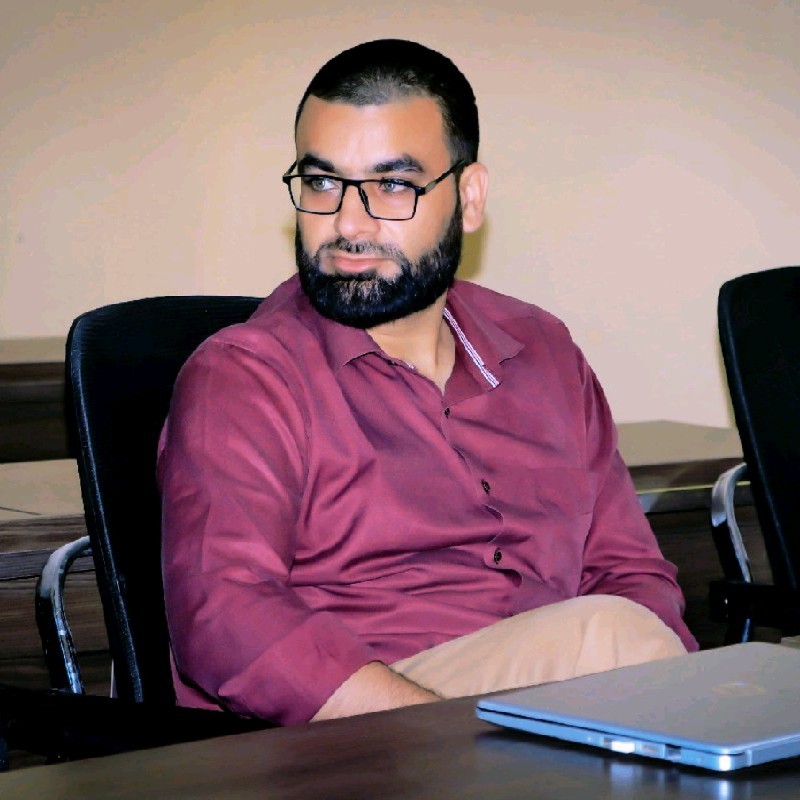
On May 9, a university administrator in Afghanistan threatened in a LinkedIn post to expose what he called a publishing scam by private universities in India.
“These institutions contact academicians globally, promising payment for publishing research papers that will boost their national and international rankings,” Mohd Asif Shah, dean of the faculty of economics at Kardan University in Kabul, alleged.
The following day, Shah elaborated in a new post: “Four years ago, Woxsen University asked me to publish papers and file patents under their affiliation. I agreed, delivered, and they proudly displayed those publications on their website. Now, after four years, they are denying payment for that work.” He also complained his “patent incentives were being unilaterally reduced” from 40,000 Indian rupees (US$420) to 17,500 rupees (US$184) per patent — “a reduction of over 56%.”
If the case seems like déjà vu, it should. In 2023, Shah outed a similar publishing scam by Saveetha Institute of Medical and Technical Sciences in Chennai, India, as we reported at the time. And just as his deal with Woxsen turned sour, so did his agreement with Saveetha three years ago.
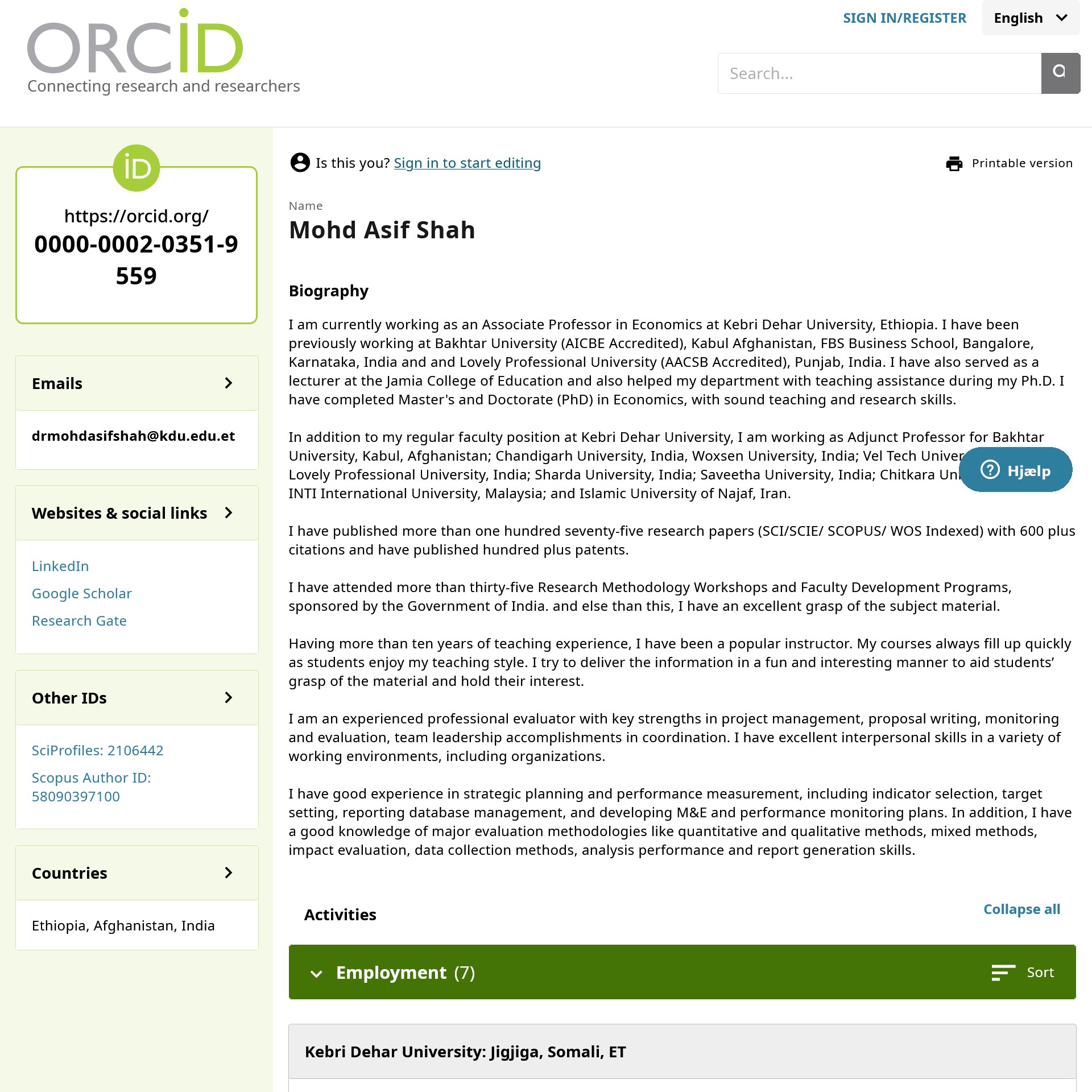
“I am here today exposing one of the biggest scams done by a few higher educational institutions in India,” Shah, at the time an associate professor in Ethiopia, wrote in 2023 in a LinkedIn post that later disappeared. According to his ORCID profile, which has since changed, Shah was an adjunct professor at 10 different universities in Afghanistan, India, Malaysia and Iran, in addition to his position in Ethiopia.
The tactic is not new. As we noted in our earlier story, “In 2011, Science described how Saudi universities offered tens of thousands of dollars to highly cited researchers overseas to boost their academic standing. Although European institutions have recently pushed back against this practice, scientists in other parts of the world may face less scrutiny and still be attractive targets for universities hungry for publications.”
A few days after his threats on LinkedIn last month, the disgruntled dean sent an email documenting his employment in 2022 as adjunct professor at Woxsen University in Kamkole, near the city of Hyderabad.
The email lamented what Shah described as the institution’s “Fraudulent use of research output for accreditation without honouring corresponding obligations,” which will “Discourage genuine research in India.”
Shah also attached a list of faculty and student work from the university’s website that included 59 research papers and patents he published. Among the recipients of the email were several government bodies in India as well Retraction Watch staff and Woxsen executives.
Then, on May 18, Shah declared the “miscalculations and misunderstandings” between himself and the university had been put to rest, offering no explanation. He also deleted his threatening posts on LinkedIn.
Shah did not respond to emails seeking comment.
Woxsen, whose business school is among the most highly ranked in Asia, acknowledged Shah was an adjunct faculty member and that “research output” was among his duties. An email signed “Vice President, Woxsen University” (presumably Raul Villamarin Rodriguez) told us Shah had been “duly compensated for his entire tenure” and had also received “an incentive towards high quality research output.”
The Woxsen vice president denied the university solicits “academics with offers of incentives in exchange for placing our affiliation on their work,” but did not say whether Shah had done any teaching or other work at the institution beyond producing papers.
As to the missing payments, the vice president explained, “we do not endorse or permit the assertion of multiple concurrent affiliations on outputs produced under its sponsorship and hence, the compensation in respect of those particular outputs was held pending resolution of that policy concern.”
Shah is a prolific and versatile researcher. As we reported in our previous story, “In 2023 alone, Shah published more than 100 research papers on everything from the fabrication of graphene-based nanocoatings to predatory arthropods in rice fields and the sensory profile of spiced yogurt.”
He also holds several patents, according to the list of Woxsen publications he attached to his email. One is titled “Design Of Chitosan Nanoparticle Coated Mini-Implants For Dental Issues And Analysis Of Their Properties,” for instance, another “Implementation Of Effective Drug Delivery System For Cancer Immunotherapy Using Porous Nanomaterials.” (Woxsen appears to have scrubbed his works from its website.)
Shah continues to be active in a variety of research areas. Of the dozens of papers he has published in Springer Nature’s Scientific Reports, for instance, the latest from May looks at how onion and garlic plants respond to being watered with untreated municipal wastewater. The paper lists two affiliations for Shah in addition to the Afghan university where he is dean: Lovely Professional University and Chandigarh University, both in India. The work was supported by King Faisal University in Saudi Arabia.
Like Retraction Watch? You can make a tax-deductible contribution to support our work, follow us on X or Bluesky, like us on Facebook, follow us on LinkedIn, add us to your RSS reader, or subscribe to our daily digest. If you find a retraction that’s not in our database, you can let us know here. For comments or feedback, email us at [email protected].
I find Shah’s behaviour and professionalism as deplorable as the universities that engage in this practice. This is a case of pot calling the kettle bad. They are both engaging in unethical behaviour and this article needed to call that out clearly too.
“Shah is a prolific and versatile researcher. As we reported in our previous story, ‘In 2023 alone, Shah published more than 100 research papers on everything…”
Sure, and the above is impossible, so I suspect much is going on behind the scenes, as also indicated by the linked article. But beyond individuals, India as a whole country should really clean up its act; this stuff is not how you ramp up on R&D.
Yes, I think that is the subtext.
“Shah is a prolific and versatile researcher.” 😸