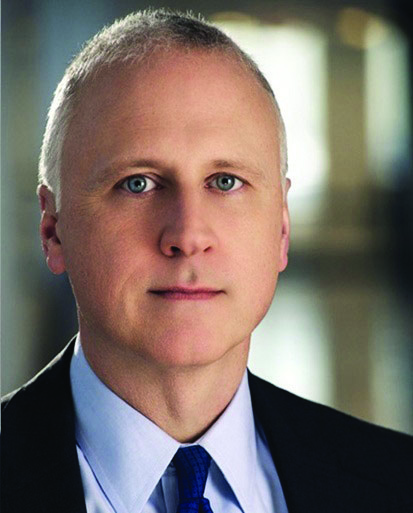
In an editorial published today in Science, Michael Lauer and Mark Barnes call for greater transparency in investigations of scientific misconduct with an aim toward making sure prospective academic employers know of applicants’ past misdeeds. As we’ve reported, in the absence of transparency around findings of misconduct, some universities have discovered too late they hired someone who has turned out to be a serial offender.
Lauer, who served as Deputy Director for Extramural Research at the National Institutes of Health from 2015-2025, and Barnes, a partner at Ropes and Gray LLC in Boston who has served as acting research integrity officer at several U.S. institutions, propose a tracking system similar to the National Practitioner Data Bank (NPDB). That database logs adverse actions and malpractice payments as a way to inform decisions about individual physicians by hospitals. As Lauer and Barnes note, federal law “requires a hospital to query the NPDB whenever it is considering a new applicant for medical privileges, as well as to conduct repeat queries every 2 years to make sure information on staff is up to date.” We asked Barnes to elaborate on the ideas presented in the op-ed. (He notes he is speaking only for himself here.)
Retraction Watch: You write in your op-ed universities may avoid sharing personal information — presumably including results of misconduct investigations — for fear of legal claims of defamation or violations of privacy. Are those fears valid?
Mark Barnes: Saying something that is true, and saying it in good faith and in the course of fulfilling an institutional mission, carries little to no risk of an ultimate liability imposed by a court. Last year, my colleagues and I did a thorough review of actual defamation cases filed that were related to findings of research misconduct, and we published the results in the Journal of Law, Medicine & Ethics. We found that the risk of liability for an institution’s saying to journal editors, or to others with a need to know, the essential information about misconduct findings or conveying indicia of misconduct has little to no risk demonstrated in reported legal cases.
At the same time, for an institution to be threatened with a defamation claim by a faculty member, much less having a lawsuit filed against it, is traumatic. It disrupts institutional order, is a distraction from other important matters, erodes faculty morale, and costs time and money to dispute. What Mike Lauer and I are proposing here is meant to be a way out of this dilemma by imposing clear rules for what an institution would need to disclose to an organized, curated database, and insulating the reporting institution from liability for defamation for having adhered to those reporting obligations. It’s important to note that this proposal would require reporting only of the final institutional and peer review determinations of serious misconduct, not the reporting of suspicions, gossip, or hunches. In these problem cases we’re concerned about, the faculty member would have had incredible due process – much more than most other folks get in the workplace; would have been able to offer all their defenses, typically in a months-long process; and would have been judged by non-conflicted peers to have committed research misconduct, or would have been through other faculty misconduct processes that also commonly have high levels of due process protections.
RW: Wouldn’t a national database of scientists who committed misconduct be subject to privacy laws?
Barnes: In the case of the NPDB, the authorizing statute (the Health Care Quality Improvement Act) shields institutions that report in good faith, after following due process, from defamation and other liability. That would presumably be the same approach here. To my knowledge, there’s been no successful challenge, based on privacy law, to the NPDB’s structure or to the reporting obligations that animate it. Remember that it is not a public database – it’s available to prospective health care employers, state medical boards, managed care plans, and health insurers, to help them decide whether to give practicing physicians employment, medical staff privileges, medical licenses, or approval as a provider in a managed care panel. So the disclosure of information is limited and for a demonstrably salutary public purpose. The same logic would apply in a similar database for scientists, who, like physicians, perform essential social functions and often rely on public funds to support their activities.
RW: The NPDB deals with licensed physicians, but scientists aren’t licensed like doctors. Is there any precedent for having a database like this for a profession that isn’t licensed?
Barnes: Not to my knowledge, but the public interest is similar. These folks, both physicians and scientists, are foundational to our society and its progress. Both classes benefit from enormous public funds, and their workplace decisions and practices matter a great deal to public safety and welfare. The vast majority of practicing physicians never have contact with the NPDB and are never reported to the NPDB for adverse findings or disciplinary action because they have served their patients and hospitals well and without incident. The same would happen, we believe, for scientists, the vast majority of whom do their work honestly and well. But some don’t, and the goal here is to make sure that successor employer institutions know essential information about the scientists whom they are hiring and to whom they are entrusting the use of charitable or public funds. Reports to the database wouldn’t disqualify anyone for employment – we believe as a society in the possibilities of redemptive conduct – but at least new employers would be better informed as to how to supervise and to ensure research is done with integrity, by all scientists whom they employ.
RW: We know from our reporting that it’s common for misconduct investigations to find evidence for some charges but insufficient proof or evidence against other charges. But we also know some of those “unsubstantiated” claims are later found to have been valid after all. How would you want to see so-far-unsubstantiated misconduct claims handled in a transparent system?
Barnes: Findings that are tentative or suspected shouldn’t be reported to such a database. If institutions find such information later regarding new allegations, then due process concerns would suggest that the accused should have a full opportunity to be heard and to dispute the allegations – and if and when a new process concludes with findings of research misconduct, a report would be made.
RW: How would you respond to concerns about potential weaponization of such a system?
Barnes: This proposed database, because it would establish express, detailed obligations for institutions to report final determinations of misconduct by scientists, would actually decrease and impede “weaponization” of the misconduct process. As it is now, with this inconsistent pattern of reporting (or not reporting) final determinations, the reality is that rumors of misconduct, even entirely false rumors, can fly all over the place, introduced by parties with bad intent. But this proposed process would regularize and standardize reporting, require it only of final determinations, make the reports available to those with a need to know, and thus introduce accountability, predictability, and reliability.
RW: Should we be concerned about retaliation against those serving on investigation committees?
Barnes: Of course, but we are already concerned about that, and we see instances in which respondents, found by a peer committee to have falsified data, for example, or to have plagiarized the work of others, turn on the committee and threaten personal legal action against committee members. We’ve even seen students and post-doc witnesses threatened, when there’s no evidence that they spoke up in anything but good faith. These concerns are already here and now and are not caused by anything that would resemble our proposal. But it is true that a reporting system for final judgments of misconduct would raise the stakes for faculty who have been – or are about to be – judged to have engaged in serious misconduct.
RW: In your editorial, you mention the Speak Out Act, which limits the enforcement of nondisclosure agreements. How does this work, and is it in effect in all states?
Barnes: It’s a federal law, and so applies in all states, but its scope is very limited. It essentially prohibits employers from enforcing non-disclosure or non-disparagement obligations in employment agreements when the issues are related to sexual harassment and related misconduct. This is a different animal than the closed reporting system and database we have described, but I suppose one might opine that the impulse to ensure a greater openness about bad workplace conduct is active in both that act and our unrelated proposal.
RW: National misconduct mechanisms like the Office of Research Integrity and inspectors general offices are already overwhelmed and underfunded. Practically speaking, should this even be managed by the government, and can it be in an effective way?
Barnes: The Health Resources and Services Administration (HRSA), which is part of the U.S. Department of Health and Human Services, has run the NPDB for years. Almost no one would say that HRSA is over-funded, but it’s widely perceived to have done a good job of having managed the NPDB for decades. A “scientist databank” would need to be authorized by a well-crafted statute or regulation that fully accommodates the similarities and differences between the scientific culture and the clinical medical culture, and it would need authorized and appropriated funding – but the cost of this would appear to be modest. It wouldn’t even necessarily have to be run by the federal government and could be run by a non-profit or by an existing, trusted association. There could be many different ways to structure this successfully, but the time has come for more accountability in the system of hiring and retention in academic science. There may be many paths to that goal, and we have just tried to suggest one, a form of which (the NPDB) has proved effective in another comparable context.
Like Retraction Watch? You can make a tax-deductible contribution to support our work, follow us on X or Bluesky, like us on Facebook, follow us on LinkedIn, add us to your RSS reader, or subscribe to our daily digest. If you find a retraction that’s not in our database, you can let us know here. For comments or feedback, email us at [email protected].
During the open comment period for the revisions to 42CFR93 (federal regs on research misconduct), I suggested an idea for a Title-IX like reporting system, where Universities would be required to report on an annual basis how many allegations of research misconduct they received, how many they investigated, how many findings were made, etc. All this info would then be collated and published at the federal level, to enable people to make objective decisions about where to study, where to open a research lab, etc. (the same way people can decide where to attend as an undergrad’ today by looking at numbers of rapes or sexual assault cases on a per-campus basis).
The idea was ignored.
If we can’t even get anonymized reporting of numbers of cases, what hope in hell do we have for a national database with real names in it? Universities don’t want to reveal how many misconduct cases they look into per year, so there’s simply no way they’re sharing the type of information discussed in this post.
It’s a great idea (and Csaba Szabo had previously proposed a system of licensing/registration for PhD scientists), but the first step is just getting Universities to open up about the scope of the problem.
Baby steps…
That’s an interesting proposal. One question, though: currently, universities are somehow incentivized to hide the dust under the rug, to avoid damage to their reputation. This is of course very frustrating for whistleblowers and sleuths, but with a system like this one, it would mean a complete whitewashing of the misconducts. How to deal with these situations?
Good point. It would require a paradigm shift, recognizing that fraud is an inevitable component of human behavior, and that finding and stopping it was the right thing to do rather than trying to make believe it didn’t happen
Great idea! I like that it’s proposed as a closed system but being closed, I feel like it would be nice to be able to use such data for metascience research- not to point and accuse but to really understand the breadth and how public funds are used. Definitely will need a regulation or law forcing unis to report, though.
Great idea, indeed! Now imagine that database of offenders expanding to become international in scope.
Yeah, yeah … baby steps first but, hey, a guy can dream, right?
This is a great idea. The massive problem with academic dishonesty is the lack of consequences. For the life of me, I don’t understand why. FWIW, I have a small website that I run for fun and random commentary, but I addressed the issue here: https://electricmammal.com/wordpress/index.php/2026/02/07/academic-fraud-wheres-the-rage/
Of course it will be weaponized, and being official and of wide effect, it will be quickly colonized.