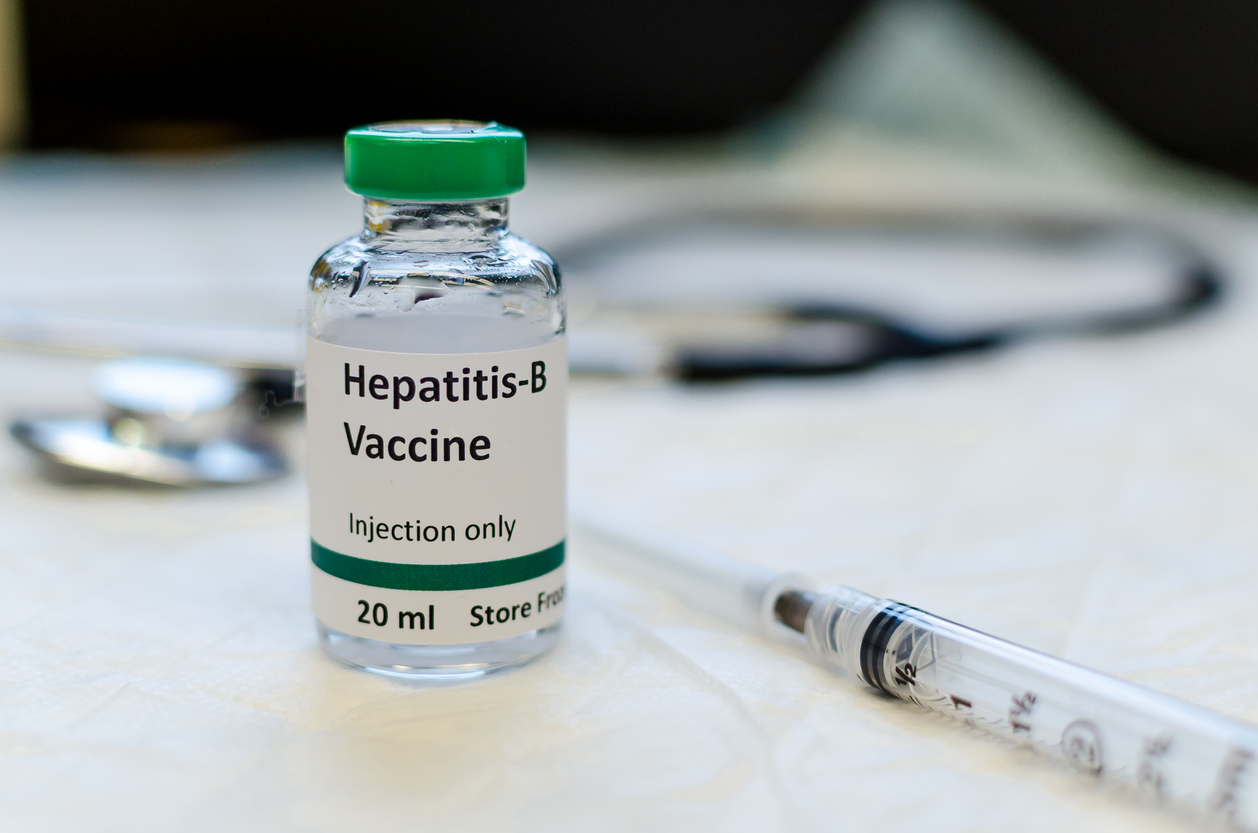
The Committee on Publication Ethics (COPE), an international organization that establishes best practices for scholarly journals, has endorsed specific ethical standards for studies that involve vulnerable groups. Among these standards is this statement in the Declaration of Helsinki: “Reports of research not in accordance with this Declaration should not be accepted for publication.” The current controversy about the U.S. Centers for Disease Control and Prevention (CDC) funding for a proposed study of hepatitis B vaccines in Guinea-Bissau must serve as a reminder of this core requirement of publication ethics.
An unsolicited $1.6 million grant to the Bandim Health Project at the University of Southern Denmark (SDU) would randomly assign more than 14,000 newborns into two groups, those who would receive the vaccine at birth and those who would act as a control group with delayed vaccination. The purpose of the controversial study was to assess the “broader health effects” of the vaccine for the control group.
But we already know the most critical health effect beyond the 48-months of the study: Withholding vaccination will predictably result in an increased incidence of liver disease later in life, including liver failure, cirrhosis and cancer. Therefore, the true scale of the tragedy brought on by this study would never be fully be known.

Already patently unethical, the study design would also exploit one of the world’s poorest countries, where more than 50 percent of its population live in poverty, according to the World Bank. The Center for Infectious Disease Research and Policy of the University of Minnesota reports that about 1 in 5 people born in Guinea-Bissau has chronic hepatitis B, that 9 in 10 babies who are exposed at birth develop a chronic infection and that 1 out of 4 of them will die of hepatitis B-related liver disease.
There is a larger bizarre context surrounding this now paused study: The Trump administration’s Advisory Committee on Immunization Practices voted in December to abandon a 30-year recommendation that all babies born in the U.S. be vaccinated for hepatitis B at birth. This is a recommendation that flies in the face of the best available evidence about the dangers of failing to vaccinate. The World Health Organization and pediatric and infectious disease groups uniformly recommend hepatitis B vaccination at birth. It is only Kennedy and his cadre of anti-vaccination zealots who see harm from a beneficial vaccine where none has been shown and sought to initiate a study to vindicate their dangerous view.

How, then, should science journals respond to efforts by the SDU investigators to publish results if the study goes forward? Following the COPE guidance, none of that data should be published. Unlike flawed analysis or intentional fraud, unethical research is a moral failure at the outset, one that is evident not only to the scientific community but to the world at large. Journal editors therefore have a special responsibility to ensure that studies that violate consensus moral standards do not find their way into their pages. In the last two decades there has been an uptick in retractions for ethical violations and lack of ethics approval — retractions that could be prevented by abiding by COPE guidelines and not publishing the research in the first place.
This is not a matter of censorship or “cancellation” of results that do not square with biases. It is a question of ensuring that there are no incentives for unethical research. The responsibility of journal editors is clear: No “data” from any discriminatory and life-threatening study including this one should be published.
The Guinea-Bissau Hepatitis B study is not a hard case. No study that is sure to expose newborns to a life-threatening involvement with a well-understood fatal disease that can easily be prevented is justifiable. Responsibility for even proposing manifestly unethical research falls on many parties, in this case not only the CDC funding agency which, before pushback, had contracted for the investigation but also the study group involved and Danish health and science authorities who approved it. The leadership of the University of Southern Denmark itself must also be called to account.
To be sure, there are other ways to publish data these days, and there are plenty of disreputable outlets that might enjoy the attention that a prominent scandalous research project would attract. But that does not change the duties of responsible publication outlets. The community of legitimate journal editors recognized by their peers as upholding moral standards must, to maintain their legitimacy, draw a bright line.
Art Caplan is soon to retire as a Professor at NYU Grossman School of Medicine.
Jonathan D. Moreno is the David and Lyn Silfen University Professor Emeritus at the University of Pennsylvania.
Like Retraction Watch? You can make a tax-deductible contribution to support our work, follow us on X or Bluesky, like us on Facebook, follow us on LinkedIn, add us to your RSS reader, or subscribe to our daily digest. If you find a retraction that’s not in our database, you can let us know here. For comments or feedback, email us at [email protected].
Why is this on Retraction Watch? There is no paper published to be retracted.
Presumably this region was chosen for the trial because of the current high incidence and current low, if any, Hep B vaccination. We’re not told. One could then argue, considering the removal of the recommendation in the US for universal vaccination, that there is doubt about the value of this treatment. However, the treatment arm appear to be receiving treatment that might help, the control arm weren’t going to get it under normal circumstances. It seems to me there is the chance that we will get a clear indication of the value of this treatment and therefore not doing the trial could be considered unethical.
There is just too little information given here and I would certainly rather RT stick to the brief and why I read regularly.
According to online sources Guinea-Bissau currently vaccinates for Hep-B starting at 6 weeks of age but is planning to move to vaccination of newborns in 2027-2028. It is not an area of “low, if any, Hep-B vaccination.”
Please don’t base your conclusions on guessing when information is easy to find.
> Presumably this region was chosen for the trial because of the current high incidence and current low, if any, Hep B vaccination.
No, the region was chosen because it’s where Bandim Health Project operate, who are already known for their negotiable ethics and anti-vaccine stance.
> One could then argue, considering the removal of the recommendation in the US for universal vaccination, that there is doubt about the value of this treatment.
One **could** argue that way, if one lacked intellectual honesty.
If they actually perform the study the result will be a paper of dubious ethics, which should be retracted. This is the Tuskegee Syphilis Study revisited. Retraction is not just about fraud, it is about any poor ethics.
I can’t believe that more people aren’t drawing this conclusion. This is EXACTLY what this is…it takes a population at risk and says, “Let’s see what happens if we don’t provide care that we know is beneficial.”
The answer? Chronic disease and death. We know the answer. We’ve already made this mistake. Let’s not do it again.
I fully agree. It seems as though whoever wrote the article is trying very hard to frame it in a certain way, leaving out important details,
This sounds more like a case of TDS than an article for retraction watch…
WRONG, o Trump Dhimmitude Supporter.
This is a very good piece. And, on a site like this, contra the other commenter, a “prior restraint” attitude is good.
For the ignorant, Arthur Caplan is the dean of medical ethics issues.
Ruining the purpose of a blog, because it fits your preferred narrative, is short sighted.
As I understand it, the purpose of the blog is to discuss the retraction of scientific papers. One valid reason for retracting a paper is if the study it describes was carried out in an unethical manner. This makes this excellent article entirely apposite. Claiming that the article ruins the purpose of the blog seems to me both hyperbolic and absurd.
Per another respondent, you’re Not.Even.Wrong.
opposition to donald trump and RFK Jr is the only honest scientific position you can take.
This comment reminds me of the South Park episode where the libs huff their own flatulence.
Enjoy the death spiral of science and technology in the US brought on by your government of morons, champ.
It’s not a death spiral of science and technology in the US. The current government executed it.
We are all DUMBER for reading such a comment…educated in ‘grievence-studies’?
But I digress: as a professional in the medical field, I’ve met a ton of brilliant people, who are fact smart, but completely irrational: hence TDS
This is a classic case of question begging. By assuming what the outcome of the study will be (that vaccination is better than not, or early vaccination is better than later vaccination) the authors argue that conducting the study will be immoral because it will include the “bad” leg. The authors use absence of evidence (for negative effects of vaccination) as evidence of absence. I don’t know what the answer is; I’m not a medical scientist. But I can see through the flaws in their reasoning.
“This is a classic case of question begging.”
That’s like saying that it’s question begging to presume the outcome of a study where we throw some people off a cliff with a parachute and others without one. We have enough prior familiarity with the subject of the study to know both its likely outcome and that the outcome will risk people getting hurt or killed.
If there had never been any safety or effectiveness studies of the Hep-B vaccine, that would make sense.
Once there have been safety and effectiveness studies, the calculus changes.
Let me use a non-politically-charged example. There is some correlational evidence that aspirin may help prevent a certain cancer in older men who have a pre-cancer condition. At some point in the past it could have been fully ethical to do a randomized controlled trial to see if this was actually true.
However, that study cannot ethically be done now, because it has been solidly established that low doses of aspirin have a heart-protective effect in men in that age class, and a large proportion of them are already taking it for that reason. So a trial would either have to exclude such men (which introduces a serious bias, because if you are *not* taking aspirin there is likely a reason–such people are not a random sample) or forbid some of them from taking aspirin anymore, which would endanger their lives.
Trial ethics must be assessed based on the body of evidence we already have. Once we knew aspirin was saving lives in this group, we could not ethically withhold it.
If you wanted to show that the proposed trial was indeed ethical, it would take a meticulous examination of the existing trials for this vaccine and a detailed showing of why they are not sufficient. If they are sufficient, the trial is flatly unethical. This is not something we get to guess about. There are a whole lot of lives at stake, because the death rate from complications of Hep-B in Guinea-Bissau is very, very high.
I have not been able to find any such detailed showing. If it exists it needs to be out there for examination and discussion. If it doesn’t exist, you cannot ethically do this trial given what’s been established by previous ones, just like in my aspirin example.
One also has to ask, if the intent of the trial is to assess side effects (which is what I’ve gathered from discussions of it), why you would conduct it in a country where Hep-B is endemic and a very serious public health problem. That seems to maximize the potential harm. It might be ethical for me to enroll my hypothetical newborn in such a study, because the chance that they are exposed is extremely low, so the information on safety might justify the tiny additional risk. But the same is not true for a Guinean baby. If, as the body of current evidence says, the vaccine works, you are exposing them to an enormous risk of illness and eventual death by withholding or delaying it.
Respectfully, I think that you are conflating the science and the ethics here. The scientific point of their study is whether vaccination has negative side effects and, if so, what they are. We can almost say with certainty that vaccination DOES come with some potential harms. All treatments do. Doctors and their patients weigh those negative effects not against NOTHING, but against the outcome of not treating. In this case, that is probably going to be increased incidence of disease and, potentially, some deaths. This is the ethical problem with this. Epidemiological data probably shows consequences for not vaccinating, and the doctors providing treatment have already decided that they should switch to vaccinating at birth. If it were as effortless as simply snapping their fingers, they probably would have done it already. But there are logistical changes that mean that it will be harder than that, hence the delayed implementation.
This is why, in a vacuum, the more appropriate population to do this study in would be a group of people who WOULDN’T be exposed to Hep B. In that case, you’re isolating the consequences from the vaccine without potentially causing secondary harm.
Assuming such a population doesn’t exist, the next most appropriate methodology would be to compare health outcomes on an OBSERVATIONAL basis. There will, likely, be some group of people who don’t get vaccinated when they are supposed to, for whatever reason. Compare the relevant health statistics for THOSE children against the children who ARE vaccinated, controlling for as many variables as you reasonably can. The data will be weaker and harder to obtain, but they would be ethical at least.
If I remember correctly what I read elsewhere, the study also had not been submitted for approval to a review board in Denmark, while the rule is that approval is needed both in the country of the researchers and the country where the study would be conducted.
This assumes that we don’t *already* have bountiful evidence demonstrating effectiveness, safety, and benefit. Actually we have 50+ years of studies across the world and a Nobel prize backing up the importance of neonatal vaccination. See the studies on how deadly hep B infection is and how effective the vaccine is at preventing it, including this one https://www.nejm.org/doi/full/10.1056/NEJM199706263362602 showing marked reduction in childhood liver cancer, and numerous studies proving its safety. In addition to being unethical, the study at proposed wouldn’t even provide valuable novel info.
Read the article. Both groups are being vaccinated.
If you are exposed before or during birth, a 6 weeks vaccination will not help. That’s why infants in most places are vaccinated at birth.
It’s not ethical to do a study on stroke where you treat one group within the Golden Hour and another an hour later, even though both groups are “being treated.”
You don’t know that. The study isn’t done. Why would you try to impose your guess as science?
A guess? As per the RW article: “An unsolicited $1.6 million grant to the Bandim Health Project at the University of Southern Denmark (SDU) would randomly assign more than 14,000 newborns into two groups, those who would receive the vaccine at birth and those who would act as a control group with delayed vaccination”.
I imagine that the doctors responsible for the Tuskugee Syphilis atrocity used similar rationales. “Hey, there’s nothing to stop these guys from going to another doctor and getting a real diagnosis and a real treatment, so we’re not really depriving them of treatment to see how syphilis progresses; we’re just delaying it.”
The trial protocol uploaded in the Bandim Health Project website provides the following information:
a) Currently newborns in Guinea-Bissau receive BCG and OPC vaccines at birth, and pentavalent HepB vaccines at 6 10 and 14 weeks (to prevent horizontal transmission).
b) The WHO recommendation is that newborns receive also monovalent HBV0 at birth, to prevent vertical transmission of HepB.
c) The country has decided that from 2028, newborns will follow the WHO recommendation
d) The trial will select a group of newborns that will receive the HBV0 vaccine at birth earlier than the planned country-wide adoption, while they will receive the rest of the current vaccination plan intact.
e) The rest of the newborns will continue to receive the current vaccination plan of the country.
1. Based on the above, the researchers say that there is nothing unethical here, because they don’t deprive newborns of anything. What they do is to provide to some of them, what the newborns’ country has decided to provide only to future newborns.
Indeed, but this is not really the issue, at all. Nobody would expect that the researchers would design a study where they would stop providing currently given vaccines to newborns.
2. While the researchers of the trial do not dispute the positive effect of HBV0 at birth for battling HepB, what they want to examine is whether other indirect (“non-specific”) effects exist, possibly negative, possibly positive. Specifically, here are the research questions of the trial:
a. Does the administration of a single dose of neonatal monovalent HBV0 to newborns within 1 week of age reduce or increase all-cause mortality and non-fatal admission with infection (composite outcome) in the first 42 days of life?
b. Does the administration of a single dose of neonatal monovalent HBV0 to newborns within 1 week of age affect the risk of AD by 2 years of age?
c. Does the administration of a single dose of neonatal monovalent HBV0 to newborns within 1 week of age affect neurocognitive outcomes by 5 years of age?
d. Are there sex-differential non-specific effects of HBV0?
In other words, they very consciously will use a group of newborns as guinea pigs in order to gain new knowledge, that will possibly help future newborns, whatever the trial outcome and overall assessment for HBV0 at birth is. Moreover, these are newborns, they will not even be able to decide for themselves.
What the trial will do, already in the mind of the trial researchers themselves, is to turn a group of persons into experimental subjects exposed to health/life risks, without their consent. That’s unethical, in many different ways.
The irony here is that for those scientists (including the two that wrote the polemic above) who have already concluded that HBV0 at birth is beneficial, what the trial does is to help, even a few current newborns that their country will not, with the only sad aspect being the cruelty of chance (for those newborns that won’t be selected into the treatment group). So the consistent stance given their fully positive view on HBV0 at birth, should be that this is a trial with a charitable effect apart from its scientific results, and charities can not be held responsible for not being able to provide for everybody.
Thank you for providing the factual information about the protocol. Previous discussants should be ashamed.
If the intention is charitable, they could spend the entire funding on vaccinating more newborns against hepatitis B at birth. Take the money that they want to spend on arranging the double-blinded study, analyzing the results, and publishing a paper and spend it all on vaccination.
What might be ethical is a retrospective natural experiment/analysis, like the one done in Wales of shingles vaccine effectiveness and all-cause mortality: compare the cohort of children born in the two weeks immediately before they started vaccinating at birth, with the cohort born in the following two weeks.
You cannot ethically randomize high-risk neonates away from a proven preventive intervention without mandatory maternal screening and direct protection safeguards. This is just facts. There is no rationale that you can pluck from the Declaration of Helsinki that would permit the study design based on what we already know. Furthermore, a composite outcome that includes mortality and hospital admission? You can see the writing on the wall a million miles away- this protocol is designed to support specific assertions about vaccines.
Are you suggesting that you know the outcome of earlier vaccination before it has been tested? And that all children should be in the test group… for equity?
You didn’t notice the part where he says, “proven preventive intervention.”
It’s not that we “know the outcome of earlier vaccination before it has been tested.” Rather, it’s that we know the outcome of earlier vaccination BECAUSE IT ALREADY has been tested.
So this article is saying that a study having a control group (for scientific validity of safety) is unethical? What kind of pharma-whoring trash is this? Studies need control groups. Saying that it’s dangerous and unethical to withhold the vaccine from the control group is PRESUMING the vaccine is safe and effective without any data to support that presumption. Which makes this article unethical. Asenine.
“So this article is saying that a study having a control group (for scientific validity of safety) is unethical?”
No, it is not. Read it again. Slowly, loudly, word by word.
“We can’t test this untested drug because some children wont get the untested drug” Ethics ?
“We can’t test this WELL-TESTED drug because some children wont get the WELL-TESTED drug”
Fixed it for you.
Who won’t get the drug? There’s nothing like that proposed in the study.
Person after person in thread saying “but there’s no evidence.”
Here is a link to a systematic review which includes TWENTY-SIX studies of Hep-B vaccine in infants.
https://pmc.ncbi.nlm.nih.gov/articles/PMC6022616/#:~:text=Of%2026%20studies%20that%20met,0.23%E2%80%930.45)%2C%20respectively.
Nobody is suggesting that the vaccine is unsafe and lack benefits for infants. The key issue that people are discussing is vaccination right after birth vs 6 weeks afterwards
Precisely, but that issue implies a critical question you left out: whether it is ethical, having safe and effective vaccines for newborns, to delay vaccination 6 weeks to a fraction of them in a country where the disease is endemic, therefore (unnecessarily) exposing those babies to HBV during that period.
A general comment: I have been a reader of RW for many years. Every now and then there is a post like this one, where some commenters say “this is off-topic and shouldn’t be here.” So far I always find these posts of interest, so thank you RW for continuing to be broad-minded about what topics are worth posting on.
Agree. Plus, it’s RW’s blog. Can they not post whatever the hell they feel like posting? What the heck?
The World Health Organization agrees with Caplan & Moreno. The proposed study is unethical for multiple independent reasons.
https://www.who.int/news/item/13-02-2026-statement-on-the-planned-hepatitis-b-birth-dose-vaccine-trial-in-guinea-bissau
The WHO is led by a vetrinarian. Lol.
Of course, this information is extremely relevant to the actual content of the “Statement on the planned hepatitis B birth dose vaccine trial in Guinea-Bissau,” I presume. Did you even read it?
Poisoning the well?
Whether or not you consider the research proposal ethical, and I personally find some of the colonialism parallels extremely distasteful, I also think it is deeply problematic that the original post is written in a clearly manipulative way. It seems designed to make the reader believe that the study will actively withhold treatment or provide inferior care to the control group.
This is not the case. At present, the standard practice in Guinea-Bissau is to give children the vaccine after six weeks. The study aims to investigate whether administering the vaccine immediately after birth, in line with WHO recommendations, leads to better long-term outcomes compared with standard care, which is vaccination at six weeks.
For that reason, the quote below is, at best, misleading and, at worst, crosses into outright untruth. It appears intended to appeal to emotion rather than reason.
“Withholding vaccination will predictably result in an increased incidence of liver disease later in life, including liver failure, cirrhosis and cancer. Therefore, the true scale of the tragedy brought on by this study would never be fully be known.”
The study will not “withhold vaccines” from any infants, nor will it “increase the risk of liver disease” for any child enrolled. A more accurate criticism might be that the control group, which receives standard care, may not experience the potential reduction in liver disease risk that earlier vaccination could provide. Even so, that line of argument is weak. Comparing a new or recommended intervention with existing standard care is precisely how ethically conducted clinical trials are designed. In fact, a bad faith argument could be made that by applying the same logic laid out by the authors, shutting down the study is “bringing tragedy about” since no babies are now getting the recommended vaccination schedule.
I can’t help but wonder what purpose the authors of the original post had to deliberately misrepresent the study design instead of presenting the facts clearly, especially when there are several aspects of the study that genuinely merit ethical debate. For example, where the researchers seem to be skirting good ethical conduct, in my view, is in taking advantage of already suboptimal medical care in an African country. That, to me, is where the truly interesting and important discussion lies.
Thank you for a reasonable comment. Many of the prevous comments are very nonsensical; leading to concern that this blog needs to promote itself to the scientific community rather than the current liberal arts community that it seems to be attracting. If the blog isn’t reaching actual scientists, it has no utility.
I am an actual scientist and a regular reader. But consider that a public-facing blog with no access restrictions may get flooded on contentious or politically-adjacent topics (like this), by people who want to share opinions but may have no particular knowledge. The number of comments doesn’t say anything about the median reader’s understanding of the topic.
I 100% agree. The post definitely left out many important details, effectively using straw man tactics.
The Helsinki Declaration requires that human subject studies provide participants with the most effective known medical intervention, not just what is standard. Vaccination at birth is by far the most effective known intervention. The study is objectively unethical.