Nature has retracted a paper after an investigation at a U.K. institution found the first author — then a doctoral student — manipulated data.
The paper, which looked at the sensitivity of lung cancers to immunotherapy, appeared in April 2023 and has been cited 192 times, according to Clarivate’s Web of Science.
The retraction notice published today states first author Kevin Ng was responsible for the manipulation in the paper, including manipulated data in several figures. At the time of the experiments, Ng was a Ph.D. student at the Francis Crick Institute in London under the supervision of co-corresponding author George Kassiotis.
According to Ng’s ORCID profile, he is now a postdoctoral fellow at Rockefeller University in New York. We were unable to find a current email address for him, and he did not respond to a message sent via Instagram.
The Francis Crick Institute’s integrity team “was made aware of concerns” regarding the study after it was published, according to a statement sent to us by Kathryn Ingham, research communications and public affairs lead for the organization. Ingham declined to comment on the origins of the concerns. The corresponding authors on the article — Kassiotis, Charles Swanton, and Julian Downward, all affiliated with the Crick Institute — agreed with the retraction, according to the statement, which is now published online.
The investigation found “no evidence of malpractice by other authors,” according to the Crick statement. The corresponding authors did not respond to our question on how the manipulation went unnoticed by the other 48 authors on the paper, and forwarded our request to Ingham.
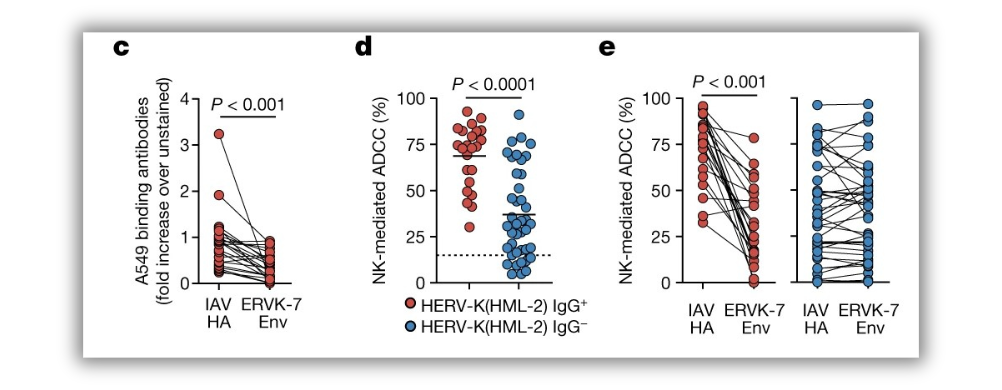
According to the Crick report, Ng manipulated cell binding data in one of the figures, and experiments relating to three other figures couldn’t be verified. The manipulated data supported the paper’s main conclusion, according to the report, and the institute recommended the paper be retracted.
The Crick Institute notified the journal about its findings and on November 21, Nature added an editor’s note to the article alerting readers to data reliability concerns.
Co-corresponding author Julian Downward, associate research director at the Crick Institute, has 27 papers with comments on PubPeer, many of which were flagged for image concerns. In 2015, Downward lost two papers in one month for data issues, including one from Nature, as we reported at the time.
Like Retraction Watch? You can make a tax-deductible contribution to support our work, follow us on X or Bluesky, like us on Facebook, follow us on LinkedIn, add us to your RSS reader, or subscribe to our daily digest. If you find a retraction that’s not in our database, you can let us know here. For comments or feedback, email us at [email protected].
Student is always the scapegoat
As opposed to? I hope you know how science/academia work – the student/first author is the one actually and directly working with the data.
Their supervisor? The student may have done it, but sometimes they do it because someone with a lot of power over them implies they will ruin the student’s career if the paper doesn’t show the results the supervisor wants. Which is systematically unacceptable, since a great researcher will get negative results if the treatment doesn’t work.
I think it rarely gets to that stage. What is reasonably common is that the student or postdoc is told that they must achieve a certain output of papers to move the next step in their career. So they are finding that they are getting papers rejected because they don’t show anything, and they realise that all they have to do is to remove a few observations. Often the reason is that their sample size is too small.
The reality is quite different. Powerful PIs attract ambitious, hungry trainees – most of whom are good, ethical people, but some minority of whom are unscrupulous. I’ve encountered plenty of such people. The really “smart” unscrupulous ones won’t directly manipulate the data, they’ll manipulate the experiments to produce good-looking data, in a way that none of the other authors would be able to realize it unless they were personally physically following them in the lab every day. In truth, Kevin Ng is just not a good enough fraudster and so he got caught. The scary thing is there are plenty more who don’t. Now of course there are unscrupulous PIs also who deserve blame, I’m not denying that. I’m just saying that things are not so black and white as “the students are always the scapegoats” – many times the trainees are the actual problem. If you don’t think so, then you don’t know enough trainees. They are out there, and they are scary.
Or jusr not trained properly
I really like this explanation Dr. Moore. If the professors can get away for being busy or not be able to spot this mistake, I don’t see why students should be crucified.
agreed, this downward fellow is extremely suspect, how were there no consequences for those previous instances of issues? should look into that hmm
How was it realized that the binding data was manipulated?
It is helpful to know the details of such accusations.
Marvin Miller, MD
Clearly a REAL clinician who deals with immune therapy, is in clinical research, and realizes that the numbers didn’t make sense. I am tired of the lies, manipulation of data and their NOT existing a true ‘forensic Data Support group ‘. Honestly, I believe this is coming- possibly with AI and teams of Mathematicians. I could tell you stories …but, I can’t.
It’s very easy to blame the students.
Actually, the long enjoying powers at the corridors of research are the main culprits. Unless their positions, titles and monetary rewards are at stake, they will not reform. Before lending their names as co and corresponding authors, or as in most of the cases, forcing the students to add their names in the research paper, they should be made to sworn the integrity of the paper.
“How the manipulation went unnoticed by the other 48 authors on the paper?”
Actually, this article was endorsed by hundreds of individuals: the list of “authors” includes two consortia, one of which (the TRACERx consortium) alone comprises 281 members (with some overlap with the listed 48 authors, including the first author).
Presumably the data manipulation was missed by the PhD supervisors and assessors; not great work on their part. I’m also interested in the authorship credentials on the 48 participants – I find it hard to believe that many people made genuine author-worthy contributions
It is not just the student’s fault!!! It is the PI’s and the professor’s responsibility as well. A PhD student is in the process of education and training. This training needs to be supervised and integrity checked at the end. Unfortunately, in many places in academia, it is like this. We need to start exposing more Professors and supervisors using harmful practices. Academia needs to change soon, or science will become a simple business of grants and professional egos.
Agree with the comments about it not being entirely the student’s fault (although he must take responsibility for his actions). I also agree with other comments about the ridiculously long author list – I doubt the majority would qualify for authorship under normal guidelines.
I do find it strange how the statement from the Crick outright names the student. Never seen that before in these kind of cases. They must be really afraid of reputational damage (à la Dana Farber) and need to throw someone under the bus (ideally not their expensive PIs).
All the time the blame goes to the PhD student if any trouble appear in paper publication including the desired result. During the paper publication, the 1st author ( probably PhD student) write the paper and go through all the writing, but the other authors also need to go through of it.
Insane how ppl are coming to the student’s defense. Institution investigated and found student manipulated data in multiple figures. Unforgivable, pathological offense. No innocent mistakes here. Wtf are we even doing here if we can’t acknowledge that?
The student is clearly at fault, but others have been at best negligent and do not seem to have faced any consequences.
I wonder whether citations from retractions are still included in h-index? This paper has a couple of hundred citations. How long will it take for people to forget about this, and did it pay?
This is him, you may extract his current Email from here:
https://scholar.google.com/citations?user=wvdyj8EAAAAJ&hl=en
Why the hell would you email him?
Not to say the PIs are completely without blame, but there also isn’t really any evidence they did anything wrong. People are saying they didn’t supervise or train appropriately. What training prevents this? Telling students that data falsification is bad?
What supervision prevents this? If I worked in a lab where the PI was constantly digging around in my lab book or surveilling me to try and see if I was faking data, I would feel very uncomfortable. I think most people would find that to be an inappropriate management style. Even if a PI was so fastidious about monitoring all of their student’s actions, it would still be pretty trivial to just edit the raw data for many assays, for example.
The big problem is that people have such a strong feeling that failure is unacceptable that they’re willing to do something they probably recognise is very wrong. That feeling can come from a PI, who would then be partially at fault, but it can also be self-imposed, in which case we can’t really blame anyone but the scientist themselves. It’s a sad state of affairs, and I do feel a bit sorry for the student, who probably felt so terrified of being a failure that they have accidentally brought their nightmares to life.
Then again, given the impact on the co-authors who probably did solid, good work for this paper and many of whom probably considered the fraud a friend, this is absolutely awful behaviour. Not to mention the wasted time and money of people following up on the work.
Long time lurker first time commenting but this is obviously a highly discussed topic currently.
I stand very much on the middle of the ongoing “who should be held responsible argument”. The students are learning and clearly this is the purpose of an advisor, to advise them on the appropriate methods and processes of conducting research. But ultimately it would be impossible for a PI to investigate every single data point of every single subordinate.
In saying that, this PI’s extensive history of suspected poor research practices should set off alarm bells for the culture he is fostering. The PI needs to not only be investigated but potentially punished.
Kevin Ng was in the Kassiotis lab, not the Downward lab, just to clarify. I don’t think he has a record of publishing suspect results.
What about this paper? https://pubpeer.com/publications/9E787A8D4D00A13B2521A241B42B99
I mean that Kassiotis doesn’t have any record of suspect publications. This paper doesn’t have him on it.
Thanks for clarifying. From “Kevin Ng was in the Kassiotis lab, not the Downward lab, just to clarify. I don’t think he has a record of publishing suspect results.” I wasn’t sure if you meant that Kassiotis, or Downward, didn’t have a record of suspect publications
The paper does have Julian Downward’s name on it.
What about this paper? https://pubpeer.com/publications/FCEBE39C3E2B25D2C4E306A9925685
I think you are giving the student a wee bit much of a leeway. This student has published in several top-tier journals as a first author: Nature Genetics in 2020, Science in 2020, and Science Translational Medicine in 2022, so I doubt he’s still in the learning phase when he was working on this 2023 manuscript. He’s not that naive to think that removing data points without a strong justification (i.e., properly documented methodological flaws at the time of performing the experiment) is permitted.
Should blame the editors and reviewers, those who overlooked this
How could they have seen that this data was manipulated? There is nothing in the graph that is obviously manipulated.
The retraction notice is linked in the article, so if you are interested, you can read it.
The retraction notice does not make it clear how an Editor or Reviewer could have noted the data was manipulated. We don’t even know how it was manipulated.