Einstein fired researcher in 2019, more than two years before ORI finding

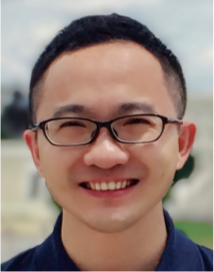
Hui (Herb) Bin Sun

A researcher who agreed to a dozen years of supervision for NIH-funded research was fired from the Albert Einstein College of Medicine at the end of 2019, Retraction Watch has learned.

As we reported last week, the U.S. Office of Research Integrity (ORI) found that the researcher, Hui (Herb) Bin Sun, and a colleague, Daniel Leong, faked data in 50 figures in 16 NIH grant applications going back to 2013. The ORI findings are dated March 21, 2022.

A spokesperson told Retraction Watch:

Continue reading Einstein fired researcher in 2019, more than two years before ORI finding

Einstein duo faked data in 16 federal grant applications: ORI

Hui (Herb) Bin Sun

A pair of researchers at the Albert Einstein College of Medicine in New York faked data in 50 figures in 16 NIH grant applications for six years starting in 2013, according to new findings from the U.S. Office of Research Integrity (ORI).

According to the ORI, Daniel Leong, a former lab tech at Einstein,

intentionally, knowingly, or recklessly falsified and/or fabricated Western blot and histological image data for chronic deep tissue conditions including osteoarthritis (OA) and tendinopathy in murine models by reusing image data, with or without manipulating them to conceal their similarities, and falsely relabeling them as data representing different experiments in fifty (50) figures included in sixteen (16) PHS grant applications. In the absence of reliable image data, the figures, quantitative data in associated graphs purportedly derived from those images, statistical analyses, and related text also are false. 

Continue reading Einstein duo faked data in 16 federal grant applications: ORI

Award-winning Berkeley postdoc faked data, says federal watchdog

Shuo Chen

A former University of California, Berkeley postdoc in physics “engaged in research misconduct in research reported in a grant application” submitted to the NIH, according to the U.S. Office of Research Integrity.

The postdoc, Shuo Chen, “reused an image of visual cortex neurons to represent fluorescence calcium imaging of hippocampal neurons,” the ORI said. Chen, who was awarded the 2019 Science & PINS Prize for Neuromodulation for this essay published in Science, also used data from a 2018 Nature Neuroscience paper he co-authored while at the RIKEN Institute in Japan “to represent several sessions of two-photon hippocampal calcium imaging of progressive place fields, obtained from multiple mice running on a treadmill in a head-fixed VR set up.”

Continue reading Award-winning Berkeley postdoc faked data, says federal watchdog

UNC-Chapel Hill vice chancellor resigns post after admitting to plagiarism

Terry Magnuson

Terry Magnuson, the vice chancellor for research at the University of North Carolina at Chapel Hill’s medical school, has resigned from that post two days after the U.S. Office of Research Integrity said that he had admitted to plagiarizing text in an NIH grant application.

As we reported March 8, Magnuson

“engaged in research misconduct by intentionally, knowingly, or recklessly plagiarizing text” from two guides, material from a company that makes sequencing kits, and a review article, according to the U.S. Office of Research Integrity.

Magnuson did not respond to our requests for comment earlier this week about whether the finding would have any effect on his positions at UNC. But in a letter today to the “Carolina Community,” chancellor Kevin M. Guskiewicz and provost and chief academic officer J. Christopher Clemens wrote:

Continue reading UNC-Chapel Hill vice chancellor resigns post after admitting to plagiarism

UNC-Chapel Hill vice chancellor admits to plagiarism

Terry Magnuson

The vice chancellor for research at the University of North Carolina at Chapel Hill’s medical school has admitted to plagiarizing text in an NIH grant application, according to a U.S. federal watchdog.

Terry Magnuson, who serves as the  Kay M. & Van L. Weatherspoon Eminent Distinguished Professor of Genetics at UNC-Chapel Hill as well as vice chancellor for research, “engaged in research misconduct by intentionally, knowingly, or recklessly plagiarizing text” from two guides, material from a company that makes sequencing kits, and a review article, according to the U.S. Office of Research Integrity.

[See an update on this post.]

Magnuson submitted the plagiarizing grant application on March 1, 2021. He has received NIH funding as recently as August, and over his career has been a principal investigator on more than $50 million in grants from the agency.

Continue reading UNC-Chapel Hill vice chancellor admits to plagiarism

A U.S. federal science watchdog made just three findings of misconduct in 2021. We asked them why.

Retraction Watch readers are likely familiar with the U.S. Office of Research Integrity (ORI), the agency that oversees institutional investigations into misconduct in research funded by the NIH, as well as focusing on education programs.

Earlier this month, ORI released data on its case closures dating back to 2006. We’ve charted those data in the graphics below. In 2021, ORI made just 3 findings of misconduct, a drop from 10 — roughly the average over the past 15 years — in 2020. Such cases can take years.

As the first chart makes clear, a similar dip in ORI findings of misconduct occurred in 2016. That was then-director Kathy Partin’s first year in the role, and a time of some turmoil at the agency. In an interview with us then, Partin referred multiple times to the agency being short-staffed. Partin was removed from the post in 2017 and became intramural research integrity officer at the NIH in 2018.

ORI — as has often been the case over the past two decades — is once again without a permanent director. The most recent permanent director, Elisabeth (Lis) Handley, became Principal Deputy Assistant Secretary for Health in the Office of the Assistant Secretary for Health in July 2021.

We asked ORI to explain what’s behind the figures. A spokesperson responded on their behalf.

Continue reading A U.S. federal science watchdog made just three findings of misconduct in 2021. We asked them why.

HHS takes three and a half years to tell us “there are no records responsive to your request”…for a letter we know exists

the waving cat, via Flickr

If you file public records requests regularly, you have likely become used to how long they can take, and how few documents you may end up with. We certainly have. But we’re prompted to share a particularly frustrating experience with the NIH.

Settle in. This is a three-and-a-half year tale — and counting.

On May 8, 2018, we made a public records request to the NIH under the Freedom of Information Act for “Any Correspondence between the Office of Policy for Extramural Research Administration (OPERA) and officials at Duke University during the month of March 2018.” We did so because, as we reported on March 23, 2018 in Science, the NIH had:

Continue reading HHS takes three and a half years to tell us “there are no records responsive to your request”…for a letter we know exists

Former Emory division director committed misconduct, says federal watchdog

Ya Wang

A cancer researcher who was a former division director at Emory University in Atlanta “engaged in research misconduct by knowingly, intentionally, and/or recklessly falsifying data” in a federal grant application and six published papers, according to new findings from the U.S. Office of Research Integrity.

Ya Wang, who retired from Emory a year ago, “falsified protein immunoblot data by reusing and relabeling the same images to represent different experimental conditions in mammalian tissue culture models of DNA damage and repair in eighteen (18) figure panels in eleven (11) figures in one (1) grant application and six (6) published papers,” the ORI said.

Wang “neither admits nor denies” ORI’s findings of misconduct, according to the agency’s report on the case. She agreed to a four-year ban on any federal funding, and to correct or retract four papers:

Continue reading Former Emory division director committed misconduct, says federal watchdog

Biotech co-founder faked data in NIH-funded research, says federal watchdog

Viravuth Yin

A former researcher at the Mount Desert Island Laboratory in Maine who co-founded a lab spinoff faked data in research supported by federal funding, according to the U.S. Office of Research Integrity.

The researcher, Viravuth Yin, “engaged in research misconduct by knowingly, intentionally, and/or recklessly falsifying and/or fabricating data,” the ORI said in an announcement about the case. The work was published and submitted from 2015 to 2019, and Yin was principal investigator on one of the grants named by the ORI, worth more than $900,000.

Continue reading Biotech co-founder faked data in NIH-funded research, says federal watchdog

Attorney asks Retraction Watch to remove post because client has lost out on opportunities

A cancer researcher once involved in a federal research integrity probe has repeatedly been denied funding and other sources of income, according to his attorney, who blamed our coverage of the case for the scientist’s continuing woes and asked us to remove a post.  

[Please see an update on this post.]

Our coverage of the work of Sam W. Lee goes back to 2013. But it was our reporting in April 2019 that Lee — once a member of the Harvard faculty — was the subject of an investigation by the U.S. Office of Research Integrity that was the subject of the attorney’s letter. ORI has yet to announce a conclusion in its inquiry, which appears to have reached a finding before we posted on the matter. He has at least five retractions — including two that appeared after April 2019 — and two expressions of concern. 

One of those expressions of concern was for a 2000 paper in Molecular and Cellular Biology titled “Overexpression of Kinase-Associated Phosphatase (KAP) in Breast and Prostate Cancer and Inhibition of the Transformed Phenotype by Antisense KAP Expression.”

The disposition of that article, published by the American Society for Microbiology, like the ORI inquiry, remains unclear. 

In a letter dated August 12, attorney Steven Seinberg, who is based in Los Angeles, claimed that since our April 2019 post, Lee has struggled both personally and professionally:

Continue reading Attorney asks Retraction Watch to remove post because client has lost out on opportunities