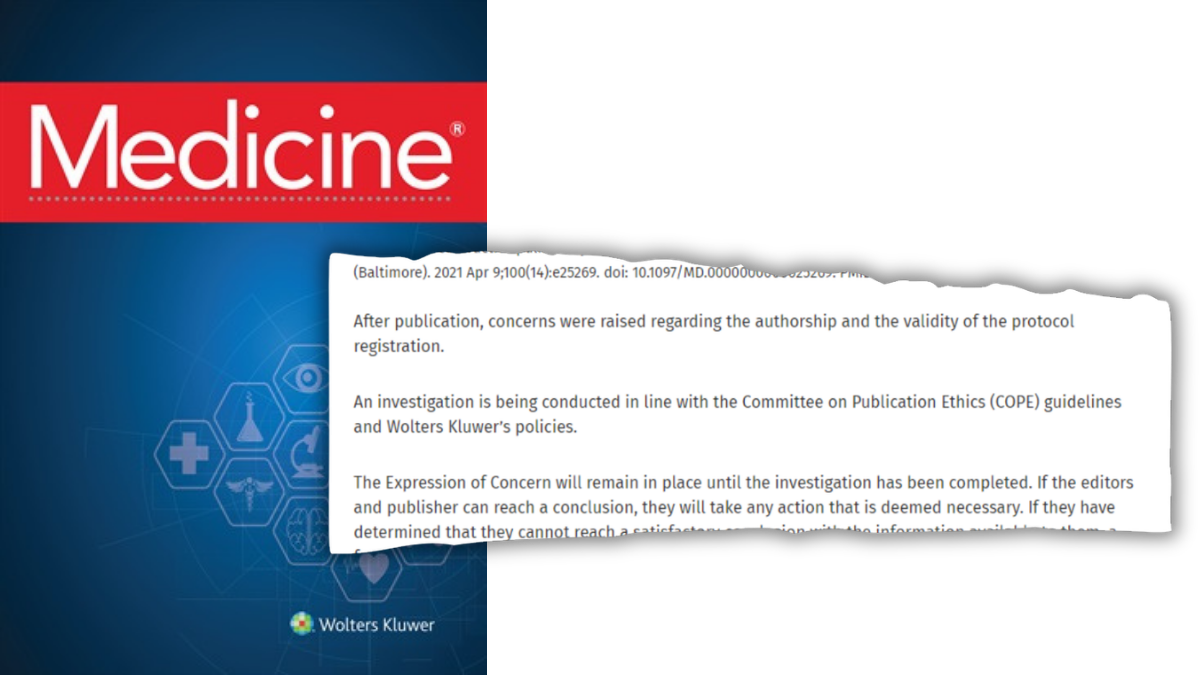
What started as a small editorial conundrum several years ago has turned into an expression of concern for dozens of papers in a medical journal, thanks to the work of an Australian physician and scientific sleuth.
In February 2022, we wrote about the decision by publisher Wolters Kluwer to retract a table that was missing in a paper in Medicine. In the end the journal pulled the whole article, which described a protocol for a clinical trial, because its authors had “not responded to multiple requests.”
The story left one reader intrigued. “I’ve never seen anything like that before,” said John Loadsman of the University of Sydney, an anesthesiologist and journal editor. “I thought, I’ve got to have a look.”
The online version of the retracted paper contained links to several related articles, Loadsman discovered. After a few hours of following links, he had found dozens of study protocols that all looked like they’d been cast in the same mold.
One common feature was that all of the studies, even retrospective ones, had been registered in a database created by Riaz Agha, a plastic surgeon and publishing entrepreneur in London who is also the editor-in-chief of several Wolters Kluwer titles.
Loadsman searched papers in Medicine that included the text “researchregistry” – a reference to Agha’s database, the Research Registry – and “protocol.” Up came 127 publications by researchers in China, including the retracted paper; 117 of those articles had been submitted to the journal in 2020.
There were many red flags. Most of the studies had been registered on the same day Medicine received the manuscripts. In some registrations, the dates of first and last participant enrollment were the same. And for many studies with different authors, the user who registered them was listed as “qsw erre.” The abstract of a paper on analgesia in women giving birth contained the sentence: “One hundred sixty full-term protozoa are included in this work.”
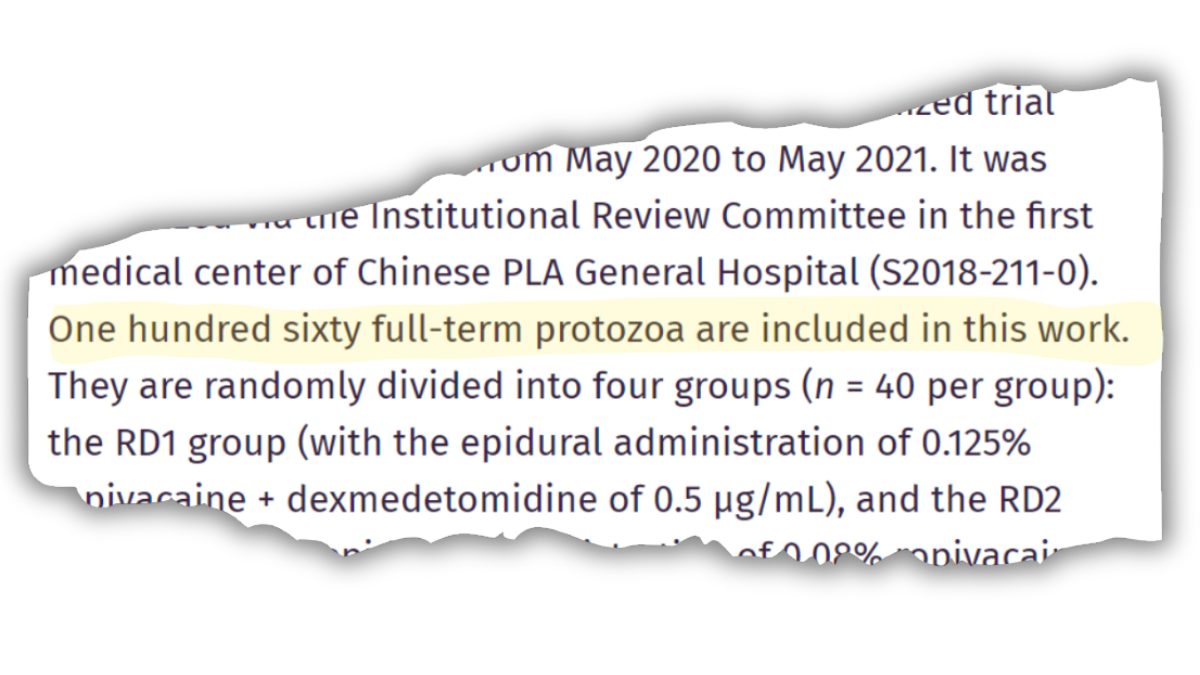
Neither Agha nor the authors listed on the protozoa paper responded to emails seeking comment.
All of the protocol papers had been accepted for publication after no more than a few days, sometimes within just hours of being submitted, Loadsman found.
“I think protocol papers became an easy target for paper millers,” he told us. “Paper mills saw this as an opportunity: ‘We’re just going to write protocol papers and get authors to pay for them and we’re going to publish them and nobody will care two hoots about it.’”
In March 2022, Loadsman sent Medicine a spreadsheet listing the suspect articles. The journal, which charges publication fees ranging from US$1,750 to US$2,250, was slow to act. So every six months or so, Loadsman would inquire about the case.
Then, in November of last year, the journal issued an expression of concern stating it was investigating the 126 articles. “It took them three and a half years to actually do anything about it,” Loadsman said.
Wolters Kluwer would not answer questions about the case.
Like Retraction Watch? You can make a tax-deductible contribution to support our work, follow us on X or Bluesky, like us on Facebook, follow us on LinkedIn, add us to your RSS reader, or subscribe to our daily digest. If you find a retraction that’s not in our database, you can let us know here. For comments or feedback, email us at [email protected].
What science and medicine really need is much smarter editors and less A.I. The largest journals especially.