A World Bank report on obesity trends with at least 14 fake references in the text has been removed from the website and is being reviewed by the organization following a Retraction Watch inquiry.
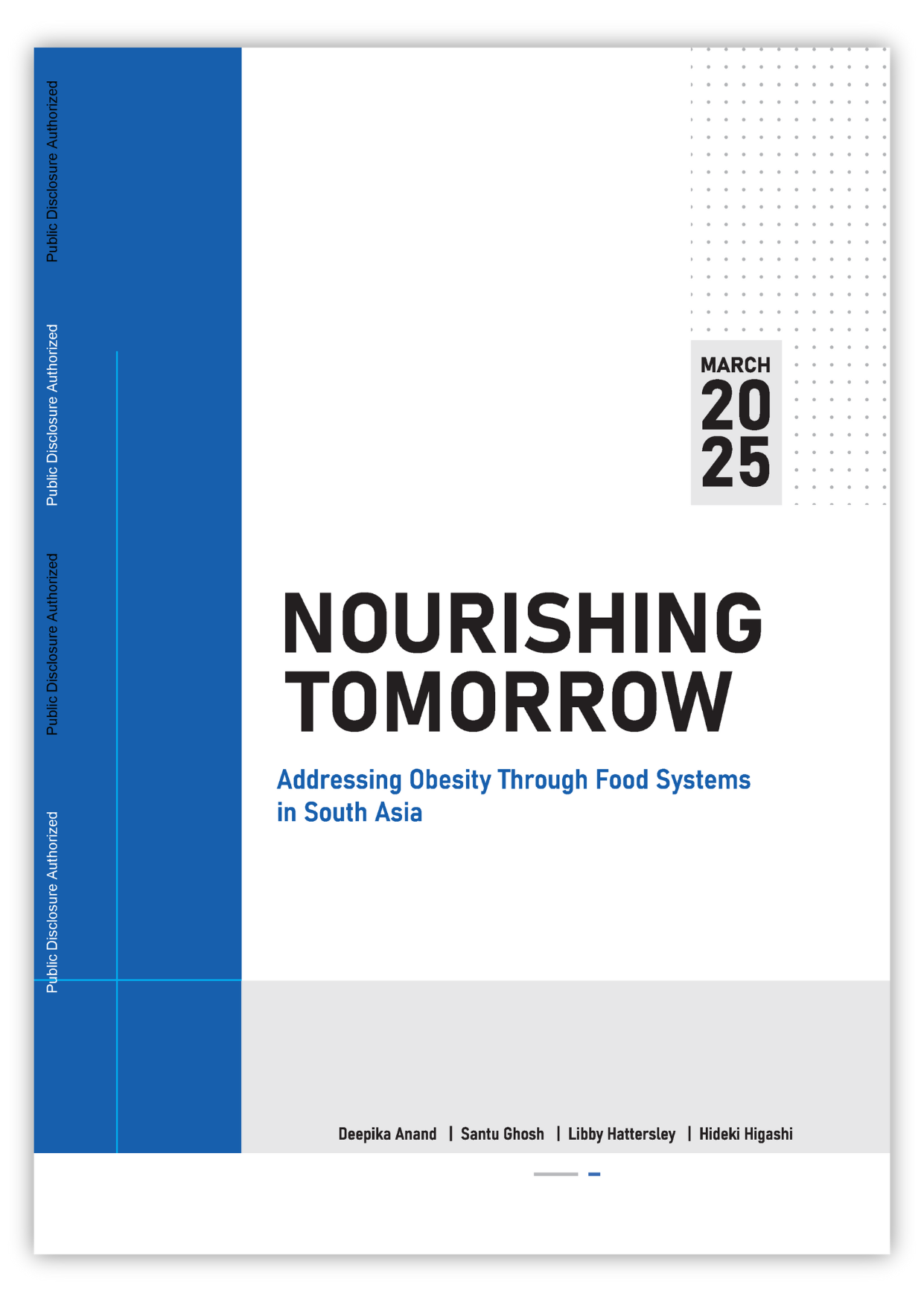
The report, “Nourishing Tomorrow: Addressing Obesity Through Food Systems in South Asia,” was published in March 2025 in the World Bank Group’s Open Knowledge Repository. The document describes an analysis of how different food systems contribute to rising rates of obesity in South Asian countries. Three of its four authors are employees of the World Bank.
Muhammad Azam first came across the report in a WhatsApp group for sports science research in Pakistan, he told us. Azam, of the Government College University Lahore, has studied the prevalence of sports science research published in predatory journals in that country. So when a group member shared that some publications Azam knew to be suspect had been cited in the report, he took a closer look and found several “problematic entries,” he told us.
We reviewed 148 references to academic articles and found 14 were to papers that do not exist. We also reviewed 32 of the 218 references to reports, policy documents, and news articles cited, and at least 14 could not be found or verified.
When we reached out to the World Bank Group with evidence of the citations, they responded with the statement: “The World Bank Group expects its researchers to uphold high professional standards, including the accurate use of sources. The paper is being removed for review and will be republished with a note clearly describing any corrections.” The spokesperson did not respond to our question about the review process for reports.
The four authors of the report did not respond directly to our requests for comment asking how the fake citations may have ended up in the document. The authors who are affiliated with the World Bank include Hideki Higashi, a senior economist; Deepika Anand, an operations officer; and Libby Hattersley, a nutrition specialist. The fourth author is Santu Ghosh, an associate professor at St. John’s Medical College in Karnataka, India.
The report was downloaded 133 times before it was taken down, according to an archived version of the website. The current version of the website says the report has been withdrawn.
Azam said he is concerned the report comes from an organization with “global authority,” noting the issue raises questions about “the integrity of the evidence base that informs international policy.”
Cases of fake references have skyrocketed in recent years and are common in text generated by large language models like ChatGPT. In July, Springer Nature retracted a book with fake citations, as we previously reported. More recently, we covered a paper with a fabricated reference to one of our cofounders, one of many in the article.
Retraction Watch Sleuth in Residence David Robert Grimes contributed to the analysis in this article.
Like Retraction Watch? You can make a tax-deductible contribution to support our work, follow us on X or Bluesky, like us on Facebook, follow us on LinkedIn, add us to your RSS reader, or subscribe to our daily digest. If you find a retraction that’s not in our database, you can let us know here. For comments or feedback, email us at [email protected].
Incredible to keep seeing sloppy scholarship continue in so many fields when the hallucinations of large language models are a well known part of doing searches and the butt of many jokes today. I get it if someone might want to get a sense of a field & source some key references to get started [although there are many legitimate & accurate reference databases out there for this purpose]. What I don’t understand is how people do not even think to check their reference sources when using LLMs. And clearly they have not ‘read’ the literature they have cited. With so many issues out there related to accuracy in publications today, this should be an easy fix & a no brainer for anyone producing any serious professional material – be it scientific, medical, legal or professional in any other sense. What a great way to destroy one’s credibility in their respective field in one foul swoop!
Seriously.
The minimum requirement of using an LLM to assist (which is what it should be doing, not writing the whole thing) – is to check each and every citation and reference it gives you before you leave them in your final document.
That is the bare minimum.
Note that in some cases the references do exist but do not come anywhere close to stating what they are referenced for. I recently rejected a paper which used two references from the 1950s for something that only dates from the 1980s.
Maybe conspiracy theories about big brother give too much credit. Perhaps big brother is just lazy and dumb.
Where are the librarians? They could have stoped this but it’s likely their funding and/or jobs were cut as that is the pattern these days.