As a lawyer representing whistleblowers of problems in the scientific literature, I follow the arc of many fierce disputes over potentially flawed research articles. I was intrigued to see last year that the National Academies had convened a Committee on Corrections and Retractions to take on the question of “recommending improvements to the processes used to correct errors in scientific articles.” The group is nearing the end of its work.
One of the most important issues that I hope the committee will address is the pervasive “impact on conclusions” test. This is the idea that the authors of a challenged article can make as many post-publication corrections to their methods or data as they like, as long as these have no impact on their conclusions. Indeed COPE guidance states that “retraction might not be appropriate” if “correction would sufficiently deal with the errors or concerns raised, provided that the main results and conclusions are not unduly affected by the correction.”
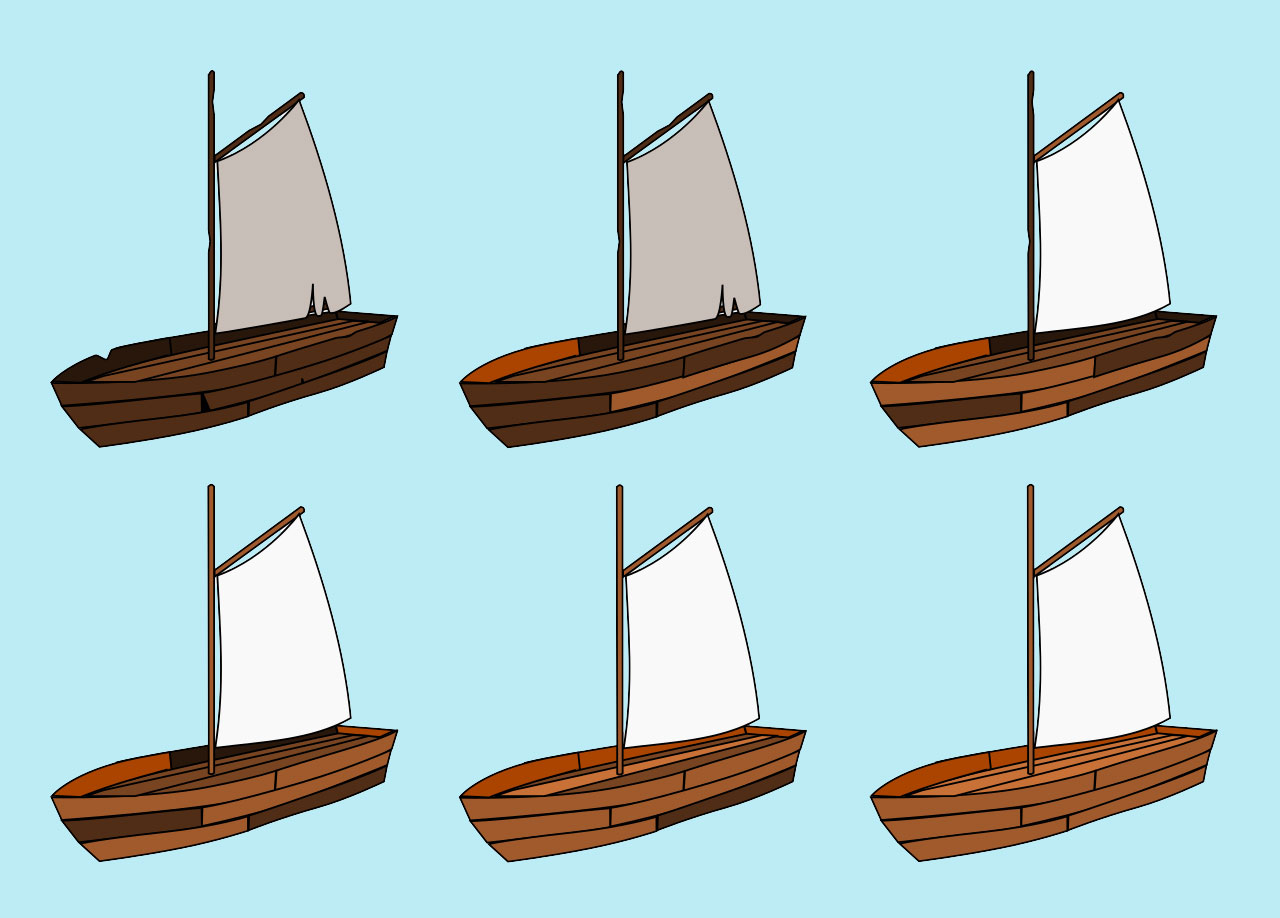
This focus on conclusions reminds me of the Ship of Theseus paradox. If the ancient Athenians were able to replace all the wood in the ship of their hero without changing its identity as the Ship of Theseus, is it possible to change all the facts inside an article without altering its conclusions?
Indeed, the outcomes of the “impact on conclusions” test are nearly always contested. They also often result in substantial harm to taxpayers, independent scientists and the onward progress of science.
It’s important to understand that the motive to stand by conclusions often is financial. As an illustration, the authors of a 2015 Nature Medicine article wrote in the second of two published corrections that revisions to multiple figures “do not impact the conclusions.” There is no financial disclosure with that assertion, but perhaps there should be: Authors can rely on an article that has been corrected but not retracted, to persuade grant reviewers that the vision they articulate in a grant proposal or renewal proposal is viable, while a retraction is the end of the article’s utility in fundraising.
My whistleblower client, Sholto David, challenged that data, which proved sufficiently flawed that Dana Farber Cancer Institute acknowledged in a $15 million NIH grant fraud settlement that the senior author should not have used the work to apply for funding.

Thus, funding agencies, and hence taxpayers, are the first-line victims of articles that prove “too big to fail,” because they are investing in research programs on a shifting factual basis, changing the risk-reward calculus.
Other researchers competing for grants also suffer. As many know, only a point or two in agency merit review scoring makes the difference between a winning proposal and a near miss. Preliminary data are hard to come by, and, if real, look inconclusive and messy when compared to a citable prestige article with conclusions backing up the hypothesis motivating a proposal. Reviewers rarely work their way through layers of corrections.
The failure to retract has other real-life consequences. In 2025, Science retracted a 2010 article reporting the discovery of arsenic-based life, observing that the editors had lost confidence in the paper’s conclusions. But the most damaging criticisms arose not long after publication, and focused on flawed experimental and analytical methods. There were eight technical comments, an avoidable expenditure of effort. In February it was good to see Science obtain the cooperation of authors to execute a timely retraction of a 2025 article on phylogenetics, while also publishing a letter by those who originated the criticisms, thereby crediting them.
Decisive retractions can bring fields that are going badly astray back on track. In my book on fraud at Bell Labs, I described the impact of more than a dozen fabricated articles in Nature and Science on the careers of dozens of graduate students, postdocs and new assistant professors, who based their own research programs on a flawed foundation. But when Bell Labs investigated itself and published a report, and journal editors coordinated retractions, the misdirected early career researchers had an explanation for why they lacked results, and assistant professors had a compelling story for their funders and tenure committees about standing by unpopular data at a difficult time.
Although this fraud was egregious, I find it plausible that in less high-profile or underinvestigated cases where the data and methods are inaccurate, flawed papers are doing others invisible harm, decimating a young investigator’s career here, setting back a tenure application there, and consistently making progress look easier to funders than it really is.
Glossy journals cranking out a diet of breakthroughs and innovations every week by press release has made science look easy to political leaders who think it safe to cut science budgets without profound harm to the enterprise. What they don’t see unless there’s a big headline-grabbing scandal is the work that goes into checking, validating and refuting claims.
My recommendation is for journal editors to hold authors strictly to the methods and data as they appeared on the day of publication. If authors cannot stand by their own descriptions of their methods or data, retraction should be automatic. Scientists earn credit when they own their mistakes by publishing generous retraction notices because their methods and data were not as they described. Nothing prevents those authors from also claiming to have made legitimate contributions and to stand by their conclusions. They can always start over and publish those.
I think there’s value in the pressure that publication day imposes for scientists to get their work right the first time, but the risk of having to retract later is a key element in that. Journals that overreach to defend the conclusions of the authors they publish will inevitably be hijacked to perpetuate the founding myths of particular laboratories or research programs.
Let’s not take that path. If an equivalent of the Ship of Theseus myth exists for our times, surely it’s the concept of a scientific record with reliable data and transparently reported methods, transcending the personal interpretations of those involved in disseminating them. Given a shared set of facts about what the authors did and what they observed, other scientists have the information we need for an efficient community consensus on whether or not conclusions stand.
Eugenie Reich is a whistleblower attorney based in Boston focused on scientific fraud. Prior to becoming a lawyer, Reich had a 15-year career as an investigative science journalist.
Like Retraction Watch? You can make a tax-deductible contribution to support our work, follow us on X or Bluesky, like us on Facebook, follow us on LinkedIn, add us to your RSS reader, or subscribe to our daily digest. If you find a retraction that’s not in our database, you can let us know here. For comments or feedback, email us at [email protected].
“My recommendation is for journal editors to hold authors strictly to the methods and data as they appeared on the day of publication” – or insist on pre-registration. It has been around for a while now and is underused.
My response to these statements is usually “these findings may not change YOUR conclusions but they absolutely do change MY conclusions about your work”
Elisabeth Bik’s taxonomy of figure errors–from a single duplicate panel, down to a Photoshop edit-fest–seems useful here. I might not be dismissive of a paper with one duplicate image, promptly fixed (her type I). But one Frankenpanel with stamp-tool shenanigans, or found in eight unrelated papers by different author groups…and you are done as far as I’m concerned. There is no reason to think anything else in the paper is more true: just harder to check.
When that meteor-impact paper was found to have Photoshopped the directional markers off of its photos, *maybe* a corrigendum could have been justified. When it was found that the markers, when replaced, contradicted the authors’ statements about photo orientation…. No. No no no. Credibility is gone.
The problems highlighted here are really important but the proposed solution needs more nuance. Most post-publication corrections indeed DO NOT change the overall conclusions. A policy of automatic retraction would be counterproductive as the authors will be demotivated to report errors, post-publication, even if they find them. Will this make science better? No.
Afterall, even if you change replace single plank of wood on the Ship of Theseus with a new one the conclusion still holds strong – A wooden ship sailed before, a wooden ship is sailing now, and will do so in the future as well.
Retraction Watch covered the black plastic spatula saga that seems tailor made for this discussion. Two corrections and lingering questions about the methods employed yet the paper has not been retracted. The authors argue the conclusions are still correct in spite of the errors in methods. It was described here: https://retractionwatch.com/2025/07/06/viral-paper-black-plastic-kitchen-spatula-utensils-chemosphere-second-correction/