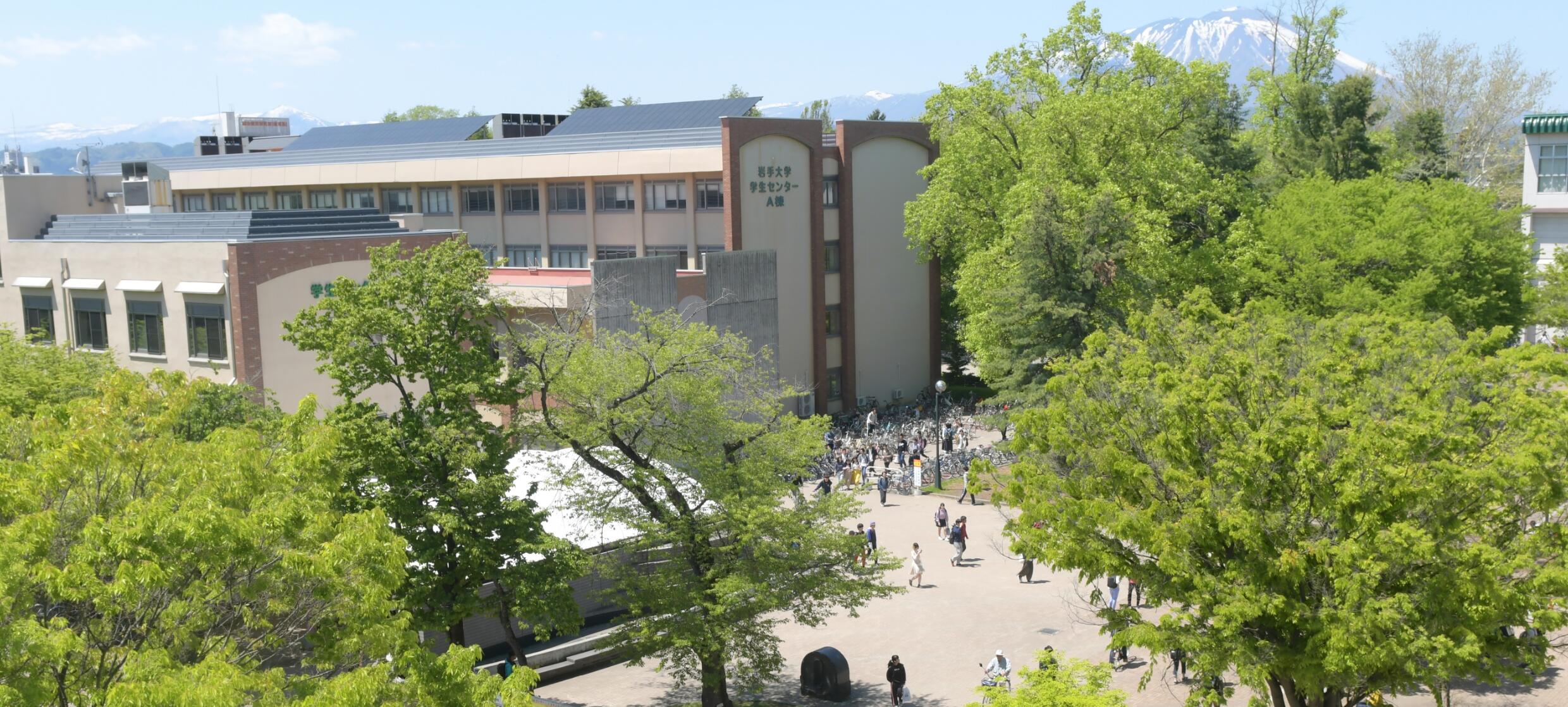
A university in Japan has suspended a fishery science professor for a month after its investigation found fabrication in a retracted paper on fish freezing.
According to the investigatory report, Iwate University scrutinized a retracted paper coauthored by six researchers at the school, including Chunhong Yuan, a professor of fishery systems science. Following the researchers’ inability to provide the investigating committee with appropriate records of the reported experiment, the inquiry found Yuan and two unnamed coauthors – a graduate student and an individual now retired – fabricated claims about the experimental conditions.
Yuan has been suspended for one month starting December 25, according to a press release. The university plans to administer additional training on research integrity for laboratory leaders, according to the report.
While the report doesn’t name the retracted article, Yuan’s only retraction to date appeared in October for an April 2025 paper published in Elsevier’s Journal of Food Composition and Analysis. The paper compared a novel freezing method for salmon sashimi to more traditional methods. The paper has not been cited outside of its own retraction, according to Clarivate’s Web of Science. The case was brought to our attention by Haklak Rockbill, professor emeritus at Ochanomizu University who tracks and writes about research ethics and misconduct.
The retraction notice states the article was retracted by the authors for concerns “regarding the verification of specific details related to the [freezing] instrument used in the study.” One of the concerns in the Iwate investigation was that the first author, identified in the published paper as graduate student Faria Afrin, said she was advised by her supervisor to record the model number of a different device from the one used in the experiment.

Other experimental documentation was also missing, with the report concluding that the research team had failed to make and retain proper records. Yuan was chastised for not appropriately instructing and supervising Afrin.
The report found Afrin intentionally committed fraud, despite being incorrectly advised by Yuan, concluding the graduate student prioritized publication based on poorly planned experiments that were inappropriately recorded.
Neither Yuan nor Afrin, now a doctoral student at Iwate, responded to our multiple requests for comment via email and LinkedIn.
The investigation began in May 2025 (a month after the publication of the article in Journal of Food Composition and Analysis and five months before its retraction), according to the report. The inquiry was triggered by a complaint that the experimental conditions of samples which were said to have been frozen were different from what was described in the paper.
The university did not respond to our request for information, including questions regarding the origin of the complaint.
The investigation team ultimately found three of the authors committed misconduct: the first author on the paper (Afrin); former specially appointed researcher “C,” whom the report says is retired; and Yuan, who supervised Afrin.
The report also said Yuan neglected her duty as PI. Although the report says Afrin will be disciplined, it does not detail how.
The retracted paper included two authors from other universities: Youling Xiong from the University of Kentucky, and A.K.M. Azad Shah from Bangabandhu Sheikh Mujibur Rahman Agricultural University, in Bangladesh. The paper’s authors did not respond to our requests for comment.
Like Retraction Watch? You can make a tax-deductible contribution to support our work, follow us on X or Bluesky, like us on Facebook, follow us on LinkedIn, add us to your RSS reader, or subscribe to our daily digest. If you find a retraction that’s not in our database, you can let us know here. For comments or feedback, email us at [email protected].
Eat more sushi!
Needs more fish puns.
“Looks like this research wasn’t up to scale.“
The paper is about sashimi, not sushi
Eat both of them!
can retraction watch stop with the click bait titles and stick to concise reporting? The title itself is border line racist. (Btw Yuan is Chinese and not Japanese)