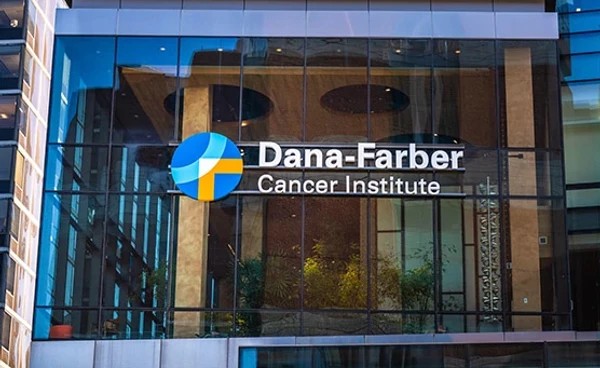
Dana-Farber Cancer Institute has settled a lawsuit filed under the False Claims Act, admitting researchers used images and data that were “misrepresented and/or duplicated” in support of grant applications to the National Institutes of Health. Dana-Farber agreed to pay $15 million to settle the claim.
Sleuth Sholto David filed the claim in April 2024, about three months after he first posted about the allegations, which played a key role in Dana-Farber’s decision to retract or correct dozens of studies. Authors of some of those papers were among senior leaders of the institution, including president and CEO Laurie Glimcher.
As is typical in such cases, the complaint remained sealed while the Department of Justice investigated. As part of the agreement, David will receive $2.63 million, or 17.5 percent of the settlement.
“I’m very pleased with the settlement,” Eugenie Reich, one of the attorneys who represented David, told Retraction Watch. “And the main thing is that the lion’s share goes back to NIH and should go back out for science.” More than $8.5 million “shall constitute restitution to the United States,” according to the settlement.
The False Claims Act allows plaintiffs to sue on behalf of the government. Plaintiffs have been successful in cases over the past decade involving universities and other research institutions including Columbia, the Brigham and Women’s Hospital, and Duke University. Judges can award whistleblowers up to 30 percent of the settlement, although this provision of the Act has been challenged recently in courts.
Typical settlements for research misconduct allegations have been in the $10 million range, although some have been smaller. As in the case of Dana-Farber, institutions often receive “credit under the Department of Justice’s guidelines for taking disclosure, cooperation, and remediation into account in False Claims Act cases.” In the Duke case, which settled for $112.5 million, the whistleblower, former lab technician Joseph Thomas, received $33.8 million.
The settlement is not surprising, said Renée Brooker, a Washington, D.C.-based whistleblower attorney with Tycko & Zavareei LLP who specializes in False Claims Act cases. And it’s among a growing number of fraud cases brought by the government for research misconduct associated with NIH research grants.
“The False Claims Act is a great watchdog, if you will, for exactly this type of fraud,” Brooker, a former assistant director for the Department of Justice in charge of False Claims Act cases, told us. “Any question brought that involves falsified or improper or inaccurate data or conclusions is important for the Department of Justice and the NIH to make an example of to deter future misconduct by any other research institutions that are getting federal money.”
However, the Dana-Farber case is unique because of the speed at which the settlement came down, says Eva Gunasekera, a whistleblower attorney also at Tycko & Zavareei LLP and former DOJ senior counsel for healthcare fraud.
“This is a really quick settlement,” she told Retraction Watch. “The case was filed in 2024. In False Claims Act-speak, usually cases take at least three years from the filing to some resolution, and usually much longer than that. I think that’s another good indication that this administration is still prioritizing much of the same kinds of fraud objectives and enforcement actions that we’ve known for the last decade plus.”
Reich also noted the speed. “One currency here is time. This has resolved in only 20 months. We know that research integrity disputes take a long time, and we know that False Claims Act cases take a long time,” Reich said, noting the original complaint included more than 90 papers. “And when you multiply that, this is fast.”
Brooker said she hoped the settlement would raise awareness among the research community about the importance of reporting fraud or false claims to the government, and the possibility of receiving a reward.
“I don’t know that you have widespread knowledge [about this] by grantees,” said Brooker, who works with Gunasekera. “It’s a little bit of a different space when you’re talking about people receiving grants versus the general health care organization type-cases. [It’s] helpful to just get on the radar screen of folks who are involved in the grant community because they have this mechanism of the qui tam provisions to report fraud in a meaningful way and possibly get justice in the reward for reporting.”
David told us he first came across many of the papers listed in the lawsuit while writing a series of blog posts in For Better Science. After writing about Memorial Sloan Kettering researcher Sam Yoon in late 2023, David said he eventually arrived at researchers from Dana-Farber by “following strings and strands” of coauthors.
In his January 2024 blog post, David called out image similarities and signs of data manipulation in dozens of papers coauthored by a number of Dana-Farber affiliates. Among those were William Hahn, chief operating officer of the Dana-Farber Cancer Institute, who David noted had an “impressive” PubPeer record, including many comments about possible image issues. David also named Irene Ghobrial, the senior vice president for experimental medicine, alleging there were “obvious duplications” in a bone marrow study.
Soon after the blog post was published, Dana-Farber requested journals retract six of the 58 studies David named and correct dozens of others, the New York Times reported.
The original complaint filed in April 2024 included 95 studies by Hahn, Ghobrial, and other Dana-Farber researchers “reflecting a pattern of fraud,” the complaint read. The complaint goes on to list several grants that relied on data in some of those papers.
The settlement does not name specific researchers, instead referring to “Researcher 1,” the principal investigator on one set of grants in the lawsuit, and “Researcher 2,” who oversaw a second set of grants.
The settlement identifies 14 papers published under Researcher 1’s supervision. The senior author on 12 of the papers is Kenneth C. Anderson, director of Dana-Farber’s LeBow Institute for Myeloma Therapeutics and Jerome Lipper Multiple Myeloma Center. Anderson has 10 retractions in our database, dating back to 2008.
The settlement reads:
Researcher 1 failed to exercise sufficient oversight over these researchers in the course of their preparation of the Subject Publications and their conduct of the underlying research reported in the Subject Publications. As a result, Dana-Farber spent funds from the Group 1 Subject Grants that were unallowable.
“The settlement agreement is noting that a PI holding a grant who fails to supervise, who’s done this repeatedly and created a pattern of flawed data — not fraudulent or misconduct, but flawed data — that they should be paying more attention,” Reich said.
The second group of grant applications listed relied on research described in a 2015 Nature Medicine article. “Certain images and data in the Journal Article were misrepresented and/or duplicated,” the settlement reads. The senior author on that article is physician-scientist Ruben Carrasco.
The article received two corrections in 2024, both image related.
An unusual aspect of the case, Reich said, was that all the pieces of the case were publicly available.
“Most of the evidence is public and has been in plain sight for a long time for people tenacious enough to track it all down and bring it all together,” she said. “I think often we’re playing whack-a-mole with a bad article and we’re not always seeing the patterns, and we’re not always seeing the money behind the patterns.”
Piecing that together is what David did, she said. “It’s a synthesis of what’s publicly available in a way that makes sense for enforcement.”
This was the first time David has been involved with a False Claims Act lawsuit, he told us.
“People might see it as an attack on universities or an attack on science,” David said. “At the end of the day, the purpose of this is, the money goes back to the NIH, and the NIH are going to spend on cancer research.”
“Most of the stuff that is written about does not come out in a press release like this,” he added, referring to research integrity issues. “That doesn’t make it any less important.”
With reporting by Alicia Gallegos, Avery Orrall and Kate Travis
Like Retraction Watch? You can make a tax-deductible contribution to support our work, follow us on X or Bluesky, like us on Facebook, follow us on LinkedIn, add us to your RSS reader, or subscribe to our daily digest. If you find a retraction that’s not in our database, you can let us know here. For comments or feedback, email us at [email protected].
It is really frustrating to read (in the PubPeer trails for these researchers) so many times when journals waved their hands and said “They say they can’t find the originals anymore so there is nothing we can do.”
That could make sense for the more innocent types of errors such as duplicate panels. But not for splicing, stretching, inverting, and recoloring an image. That is not the sort of thing that happens by accident.